New From Here
We Dream A World

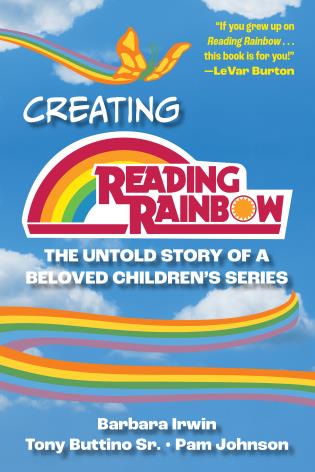
Creating Reading Rainbow: The Untold Story of a Beloved Children’s Series

Reading Rainbow is one of the most successful PBS children’s series in television history, earning numerous national and international awards including 26 Emmys and a Peabody Award. But perhaps more important than anything else, Reading Rainbow helped generations of children cultivate a love for books.

Reading Rainbow is very much a story of humble beginnings and enormous perseverance. Over five summers, Tony Buttino Sr. and his colleagues at WNED-TV, the public television station in Buffalo, New York, worked in collaboration with educators and librarians to experiment with summer reading programs. But after trialing these programs, the WNED team realized there was a big need for a new children’s literacy series and believed they could create a new show with local and national collaborators and friends. After fits and starts, and enough twists and turns to fill a children’s book, Reading Rainbow premiered in the summer of 1983 and captured the attention of 6.5 million young viewers.

Creating Reading Rainbow explores the many intriguing and homespun stories that, when woven together, reveal how this groundbreaking and iconic television series came to be. What led to the series being called “Reading Rainbow”? How did the road to Reading Rainbow wind its way through Mister Rogers’ Neighborhood? How did a public television station in Buffalo spearhead a movement in education and spark the passion for reading in millions of children? And, what does lasagna have to do with it?
More Non-Juvenile Books

  • In The Heaven & Earth Grocery Store, James McBride explores the intertwined lives of the residents of Chicken Hill, a neighborhood where immigrant Jews and African Americans coexist amid struggles and secrets. As the community rallies to protect a deaf boy from institutionalization, the narrative reveals the deep bonds of love and resilience that sustain them, even in the face of adversity and the oppressive forces of society.
  • The House on Mango Street is a poignant coming-of-age novel that follows Esperanza Cordero as she navigates her childhood in Chicago, exploring her identity and aspirations. Through a series of beautifully crafted vignettes, Sandra Cisneros captures the essence of self-discovery and the importance of telling one's story, making it a cherished classic in American literature.
  • The Hunter unfolds in a small Irish village where former Chicago PD officer Cal Hooper seeks peace but finds himself entangled in a conflict involving a reappearing father and a gold-seeking scheme. As Cal and his partner Lena strive to protect a troubled teenager from the looming threat, the lines between safeguarding and revenge blur, challenging their relationships and their morals.
  • Matt Daly’s lineage links back to Puritans from the early colonial period who helped set the course toward many of the destructive and shameful practices that Anglo-American culture has enacted on people and ecosystems around the world. The Invisible World strives to address this history, not to redress its wrongs, but at least to face them in the hope of making sense of how we might live beyond their influence. Exploring the writings of his ancestor, Matt saw an articulation of wildness as the habitat for evil. The American continent was cast as a place to be purged of its darkness. [...]