
A Girl of the Limberlost
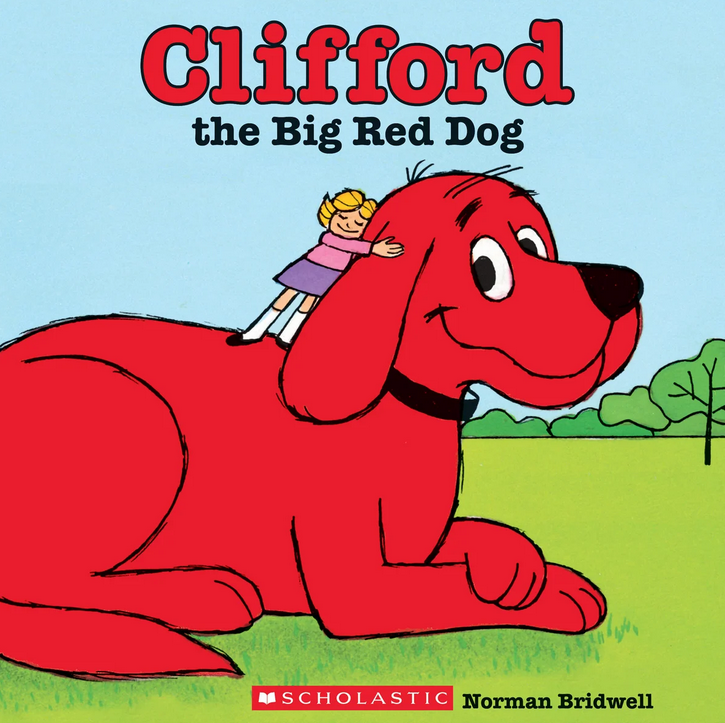
Clifford the Big Red Dog

Ben-Hur: A Tale of the Christ

Ben-Hur surpassed the fabulously popular Uncle Tom in the 19th century and was beloved for its attempt to faithfully represent the life and times of Jesus, and the person of Jesus himself. This is ironic, given that when Wallace began writing the book, he was not very religious. However, his extensive research into the Holy Land and the Bible brought him to the conviction that while his own book was a work of fiction, the Good Book was not. 20th century readers will recognize Ben Hur more from the 1950’s movie, and might not even be aware that it had first been a book. Typically, the movie isn’t as good as the book, but the movie is also an American classic. Nonetheless, the book’s attention to historical detail and its glimpse into America at a particular point in time gives modern readers deeper insight into both Christianity and the United States in the 19th century. This edition is unabridged and faithfully reflects the version as originally published in 1880.
More Adult, Non-Juvenile Books

  • How to Know a Person by David Brooks
    High Conflict: Why We Get Trapped and How We Get Out by Amanda Ripley When we are baffled by the insanity of the “other side”—in our politics, at work, or at home—it’s because we aren’t seeing how the conflict itself has taken over.That’s what “high conflict” does. It’s the invisible hand of our time. And it’s different from the useful friction of healthy conflict. That’s good conflict, and it’s a necessary force that pushes us to be better people.High conflict, by contrast, is what happens when discord distills into a good-versus-evil kind of feud, the kind with an us and a them. In this state, the normal rules of engagement no longer apply. The brain behaves differently. We feel increasingly certain of our own superiority and, at the same time, more and more mystified by the other side.New York Times bestselling author and award-winning journalist Amanda Ripley investigates how good people get captured by high conflict—and how they break free.
  • Housewife by Lisa Selin Davis challenges the outdated notion of the “breadwinner vs. homemaker” divide, arguing that women have been misled about the nature of family dynamics and motherhood. Through historical examples and cultural analysis, Davis advocates for a shift towards interdependence as the true American ideal, calling on all individuals to pursue liberation and the power to choose their own paths.
  • How to Know a Person by David Brooks
    How to Know a Person by David Brooks emphasizes the essential skill of deeply seeing others and making them feel valued and understood. By exploring questions about attention and conversation, Brooks offers insights from psychology, neuroscience, and various disciplines to foster connection in a fragmented society. This book serves as a guide for anyone seeking meaningful relationships and the joy that comes from truly understanding one another.
  • “A magnificent, compulsively readable thriller . . . Rice begins where Bram Stoker and the Hollywood versions leave off and penetrates directly to the true fascination of the myth—the education of the vampire.”—Chicago Tribune