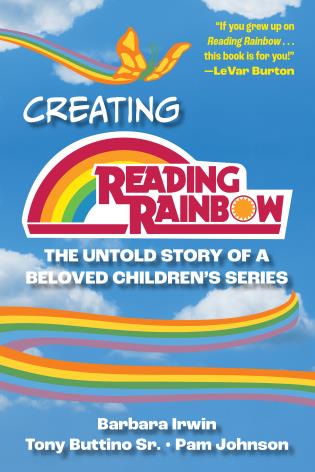
Creating Reading Rainbow: The Untold Story of a Beloved Children’s Series
Reading Rainbow is one of the most successful PBS children’s series in television history, earning numerous national and international awards including 26 Emmys and a Peabody Award. But perhaps more important than anything else, Reading Rainbow helped generations of children cultivate a love for books.
Reading Rainbow is very much a story of humble beginnings and enormous perseverance. Over five summers, Tony Buttino Sr. and his colleagues at WNED-TV, the public television station in Buffalo, New York, worked in collaboration with educators and librarians to experiment with summer reading programs. But after trialing these programs, the WNED team realized there was a big need for a new children’s literacy series and believed they could create a new show with local and national collaborators and friends. After fits and starts, and enough twists and turns to fill a children’s book, Reading Rainbow premiered in the summer of 1983 and captured the attention of 6.5 million young viewers.
Creating Reading Rainbow explores the many intriguing and homespun stories that, when woven together, reveal how this groundbreaking and iconic television series came to be. What led to the series being called “Reading Rainbow”? How did the road to Reading Rainbow wind its way through Mister Rogers’ Neighborhood? How did a public television station in Buffalo spearhead a movement in education and spark the passion for reading in millions of children? And, what does lasagna have to do with it?