The Call of the Wild
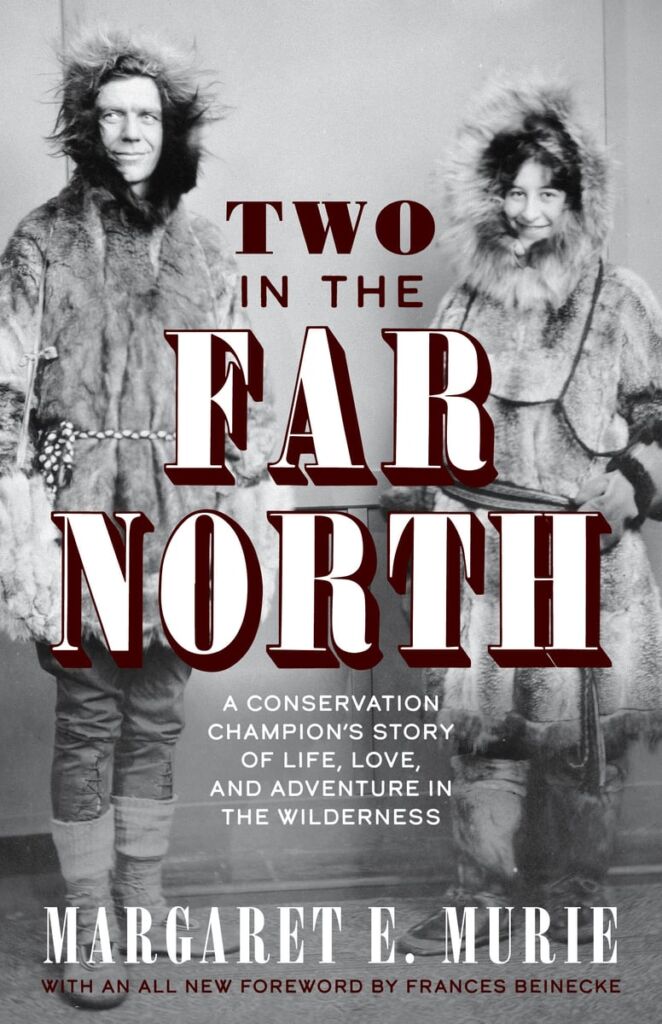
Two in the Far North

Early Warming

In Shishmaref, Alaska, new seawalls are constructed while residents navigate the many practical and bureaucratic obstacles to moving their entire island village to higher ground. Farther south, inland hunters and fishermen set out to grow more of their own food–and to support the reintroduction of wood bison, an ancient species well suited to expected habitat changes. First Nations people in Canada team with conservationists to protect land for both local use and environmental resilience.

In Early Warming, Alaskan Writer Laureate, Nancy Lord, takes a cutting-edge look at how communities in the North–where global warming is amplified and climate-change effects are most immediate–are responding with desperation and creativity. This beautifully written and measured narrative takes us deep into regions where the indigenous people who face life-threatening change also demonstrate impressive conservation ethics and adaptive capacities. Underpinned by a long acquaintance with the North and backed with scientific and political sophistication, Lord’s vivid account brings the challenges ahead for us all into ice-water clarity.
More Adult, Non-Juvenile Books

  • How to Know a Person by David Brooks
    High Conflict: Why We Get Trapped and How We Get Out by Amanda Ripley When we are baffled by the insanity of the “other side”—in our politics, at work, or at home—it’s because we aren’t seeing how the conflict itself has taken over.That’s what “high conflict” does. It’s the invisible hand of our time. And it’s different from the useful friction of healthy conflict. That’s good conflict, and it’s a necessary force that pushes us to be better people.High conflict, by contrast, is what happens when discord distills into a good-versus-evil kind of feud, the kind with an us and a them. In this state, the normal rules of engagement no longer apply. The brain behaves differently. We feel increasingly certain of our own superiority and, at the same time, more and more mystified by the other side.New York Times bestselling author and award-winning journalist Amanda Ripley investigates how good people get captured by high conflict—and how they break free.
  • Housewife by Lisa Selin Davis challenges the outdated notion of the “breadwinner vs. homemaker” divide, arguing that women have been misled about the nature of family dynamics and motherhood. Through historical examples and cultural analysis, Davis advocates for a shift towards interdependence as the true American ideal, calling on all individuals to pursue liberation and the power to choose their own paths.
  • How to Know a Person by David Brooks
    How to Know a Person by David Brooks emphasizes the essential skill of deeply seeing others and making them feel valued and understood. By exploring questions about attention and conversation, Brooks offers insights from psychology, neuroscience, and various disciplines to foster connection in a fragmented society. This book serves as a guide for anyone seeking meaningful relationships and the joy that comes from truly understanding one another.
  • “A magnificent, compulsively readable thriller . . . Rice begins where Bram Stoker and the Hollywood versions leave off and penetrates directly to the true fascination of the myth—the education of the vampire.”—Chicago Tribune