The Cemetery of Untold Stories by Julia AlvarezThe Cemetery of Untold Stories
Isn't Her Grace Amazing! The Women who Changed Gospel Music

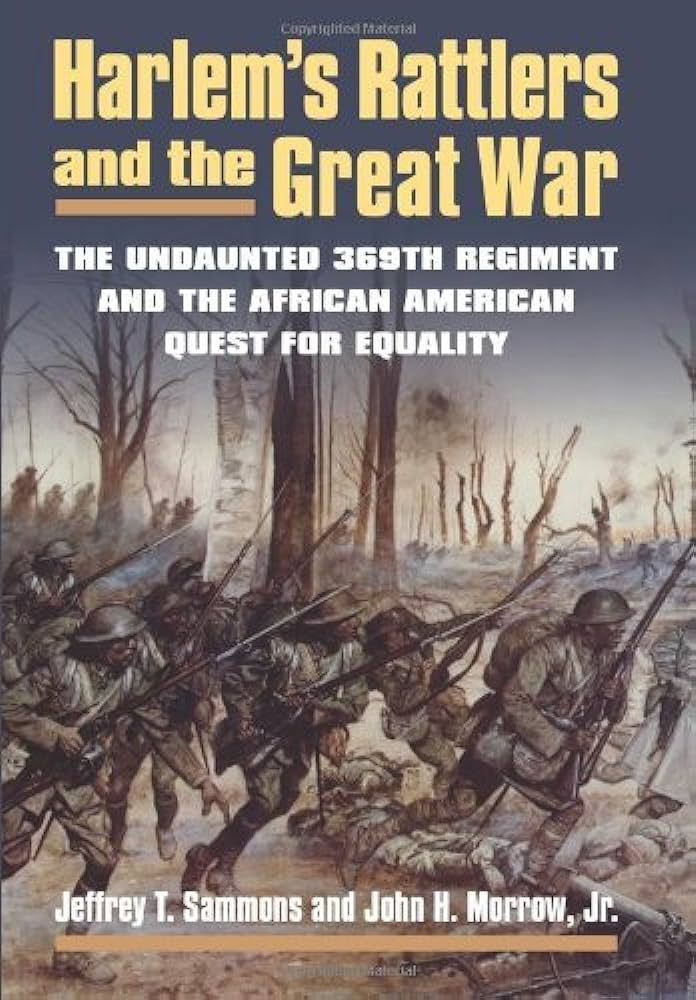
Harlem’s Rattlers and the Great War

When on May 15, 1918 a French lieutenant warned Henry Johnson of the 369th to move back because of a possible enemy raid, Johnson reportedly replied: “I’m an American, and I never retreat.” The story, even if apocryphal, captures the mythic status of the Harlem Rattlers, the African-American combat unit that grew out of the 15th New York National Guard, who were said to have never lost a man to capture or a foot of ground that had been taken. It also, in its insistence on American identity, points to a truth at the heart of this book—more than fighting to make the world safe for democracy, the black men of the 369th fought to convince America to live up to its democratic promise. It is this aspect of the storied regiment’s history—its place within the larger movement of African Americans for full citizenship in the face of virulent racism—that Harlem’s Rattlers and the Great War brings to the fore.

With sweeping vision, historical precision, and unparalleled research, this book will stand as the definitive study of the 369th. Though discussed in numerous histories and featured in popular culture (most famously the film Stormy Weather and the novel Jazz), the 369th has become more a matter of mythology than grounded, factually accurate history—a situation that authors Jeffrey T. Sammons and John H. Morrow, Jr. set out to right. Their book—which eschews the regiment’s famous nickname, the “Harlem Hellfighters,” a name never embraced by the unit itself—tells the full story of the self-proclaimed Harlem Rattlers. Combining the “fighting focus” of military history with the insights of social commentary, Harlem’s Rattlers and the Great War reveals the centrality of military service and war to the quest for equality as it details the origins, evolution, combat exploits, and postwar struggles of the 369th.
More Adult, Non-Juvenile Books

  • In The Heaven & Earth Grocery Store, James McBride explores the intertwined lives of the residents of Chicken Hill, a neighborhood where immigrant Jews and African Americans coexist amid struggles and secrets. As the community rallies to protect a deaf boy from institutionalization, the narrative reveals the deep bonds of love and resilience that sustain them, even in the face of adversity and the oppressive forces of society.
  • The House on Mango Street is a poignant coming-of-age novel that follows Esperanza Cordero as she navigates her childhood in Chicago, exploring her identity and aspirations. Through a series of beautifully crafted vignettes, Sandra Cisneros captures the essence of self-discovery and the importance of telling one's story, making it a cherished classic in American literature.
  • The Hunter unfolds in a small Irish village where former Chicago PD officer Cal Hooper seeks peace but finds himself entangled in a conflict involving a reappearing father and a gold-seeking scheme. As Cal and his partner Lena strive to protect a troubled teenager from the looming threat, the lines between safeguarding and revenge blur, challenging their relationships and their morals.
  • Matt Daly’s lineage links back to Puritans from the early colonial period who helped set the course toward many of the destructive and shameful practices that Anglo-American culture has enacted on people and ecosystems around the world. The Invisible World strives to address this history, not to redress its wrongs, but at least to face them in the hope of making sense of how we might live beyond their influence. Exploring the writings of his ancestor, Matt saw an articulation of wildness as the habitat for evil. The American continent was cast as a place to be purged of its darkness. [...]