A Thousand Trails Home
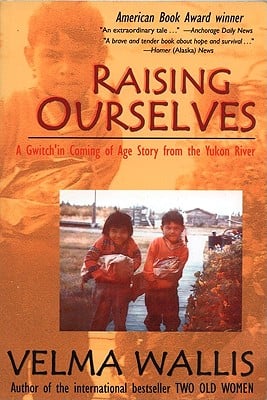
Raising Ourselves

Into the Wild

McCandess had given $25,000 in savings to charity, abandoned his car and most of his possessions, burned all the cash in his wallet, and invented a new life for himself. Not long after, he was dead. Into the Wild is the mesmerizing, heartbreaking tale of an enigmatic young man who goes missing in the wild and whose story captured the world’s attention.

Immediately after graduating from college in 1991, McCandless had roamed through the West and Southwest on a vision quest like those made by his heroes Jack London and John Muir. In the Mojave Desert he abandoned his car, stripped it of its license plates, and burned all of his cash. He would give himself a new name, Alexander Supertramp, and, unencumbered by money and belongings, he would be free to wallow in the raw, unfiltered experiences that nature presented. Craving a blank spot on the map, McCandless simply threw the maps away. Leaving behind his desperate parents and sister, he vanished into the wild.

Jon Krakauer constructs a clarifying prism through which he reassembles the disquieting facts of McCandless’s short life. Admitting an interest that borders on obsession, he searches for the clues to the drives and desires that propelled McCandless.

When McCandless’s innocent mistakes turn out to be irreversible and fatal, he becomes the stuff of tabloid headlines and is dismissed for his naiveté, pretensions, and hubris. He is said to have had a death wish but wanting to die is a very different thing from being compelled to look over the edge. Krakauer brings McCandless’s uncompromising pilgrimage out of the shadows, and the peril, adversity, and renunciation sought by this enigmatic young man are illuminated with a rare understanding—and not an ounce of sentimentality. Into the Wild is a tour de force. The power and luminosity of Jon Krakauer’s stoytelling blaze through every page.
More Adult, Non-Juvenile Books

  • Harlem's Rattlers and the Great War delves into the history of the 369th Infantry Regiment, highlighting their fierce commitment to American ideals during World War I. This definitive study challenges the myths surrounding the unit, emphasizing their fight for equality amidst rampant racism. Through meticulous research, the authors reveal how these African American soldiers not only battled abroad but also sought to hold America accountable to its democratic promises.
  • How to Know a Person by David Brooks
    High Conflict: Why We Get Trapped and How We Get Out by Amanda Ripley When we are baffled by the insanity of the “other side”—in our politics, at work, or at home—it’s because we aren’t seeing how the conflict itself has taken over.That’s what “high conflict” does. It’s the invisible hand of our time. And it’s different from the useful friction of healthy conflict. That’s good conflict, and it’s a necessary force that pushes us to be better people.High conflict, by contrast, is what happens when discord distills into a good-versus-evil kind of feud, the kind with an us and a them. In this state, the normal rules of engagement no longer apply. The brain behaves differently. We feel increasingly certain of our own superiority and, at the same time, more and more mystified by the other side.New York Times bestselling author and award-winning journalist Amanda Ripley investigates how good people get captured by high conflict—and how they break free.
  • Housewife by Lisa Selin Davis challenges the outdated notion of the “breadwinner vs. homemaker” divide, arguing that women have been misled about the nature of family dynamics and motherhood. Through historical examples and cultural analysis, Davis advocates for a shift towards interdependence as the true American ideal, calling on all individuals to pursue liberation and the power to choose their own paths.
  • How to Know a Person by David Brooks
    How to Know a Person by David Brooks emphasizes the essential skill of deeply seeing others and making them feel valued and understood. By exploring questions about attention and conversation, Brooks offers insights from psychology, neuroscience, and various disciplines to foster connection in a fragmented society. This book serves as a guide for anyone seeking meaningful relationships and the joy that comes from truly understanding one another.