Though Not Dead
Ordinary Wolves

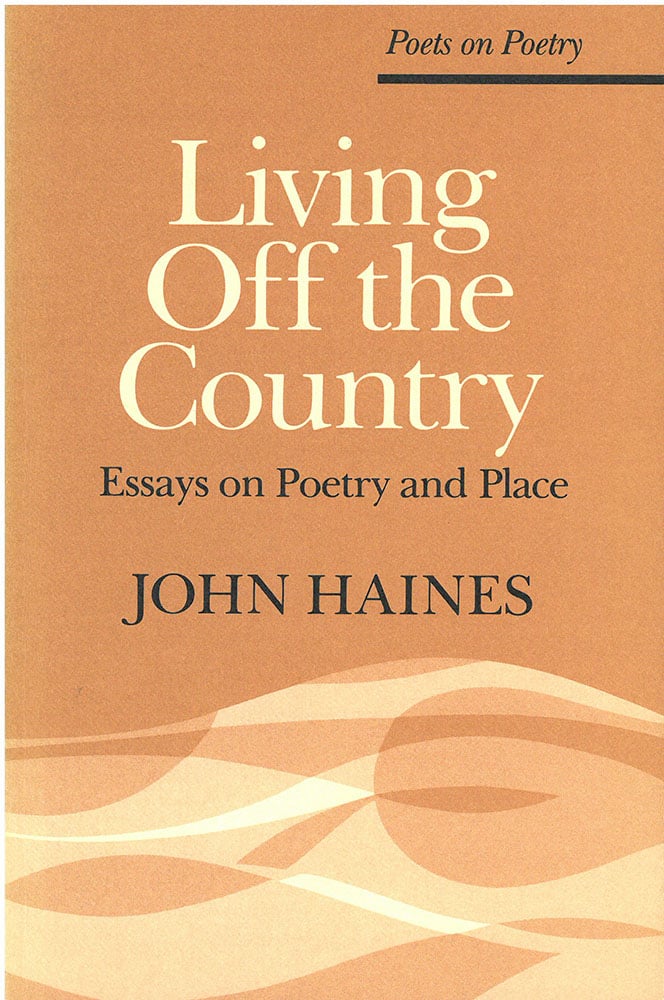
Living Off the Country

When he was a homesteader in Alaska, poet John Haines moved away from language and institutions to an older and simpler existence. In solitude, listening to his own voice, the events of his life reached into the past and the future.

We live on the surface, he discovered. It is the land that makes people. If a poet will see, will feel, will interpret his place and then relate that experience to what he knows of the world at large, he will have a life in imagination, a vitality beyond appearances.

John Haines is author of At the End of Summer: Poems 1948-1954; Fables and Distances: New and Selected Essays; and The Owl in the Mask of the Dreamer. He received the Lenore Marshall Poetry Prize in 1991.

More Adult, Non-Juvenile Books

  • Game warden Joe Pickett fights for his life as his daughters try to uncover who shot him and left him for dead in this riveting new novel from #1 New York Times bestseller C. J. Box. Marybeth Pickett gets the call she has always dreaded: her husband Joe is in critical condition with a gunshot wound to the head. Joe was found in his pickup at Antler Creek Junction, a crossroads connecting three ranches. Each road leading to a dangerous family. Each family with a different bone to pick with the local game warden. Marybeth and the new sheriff assume that [...]
  • Winner of the 1987 American Book Award The Essential Etheridge Knight is a selection of the best work by one of the country’s most prominent and liveliest poets. It brings together poems from Knight’s previously published books and a section of new poems.
  • The Fault in Our Stars is insightful, bold, irreverent, and raw. It brilliantly explores the funny, thrilling, and tragic business of being alive and in love.
  • In The Golem of Brooklyn, Len Bronstein, an art teacher with little knowledge of Judaism, accidentally brings a golem to life after stealing clay and getting high. As this nine-foot-six, Yiddish-speaking creature learns about contemporary crises, including the rise of white nationalism, it embodies the weight of Jewish history and trauma, prompting profound questions about humanity and identity.