Good Night Thoughts
All Creatures Great & Small

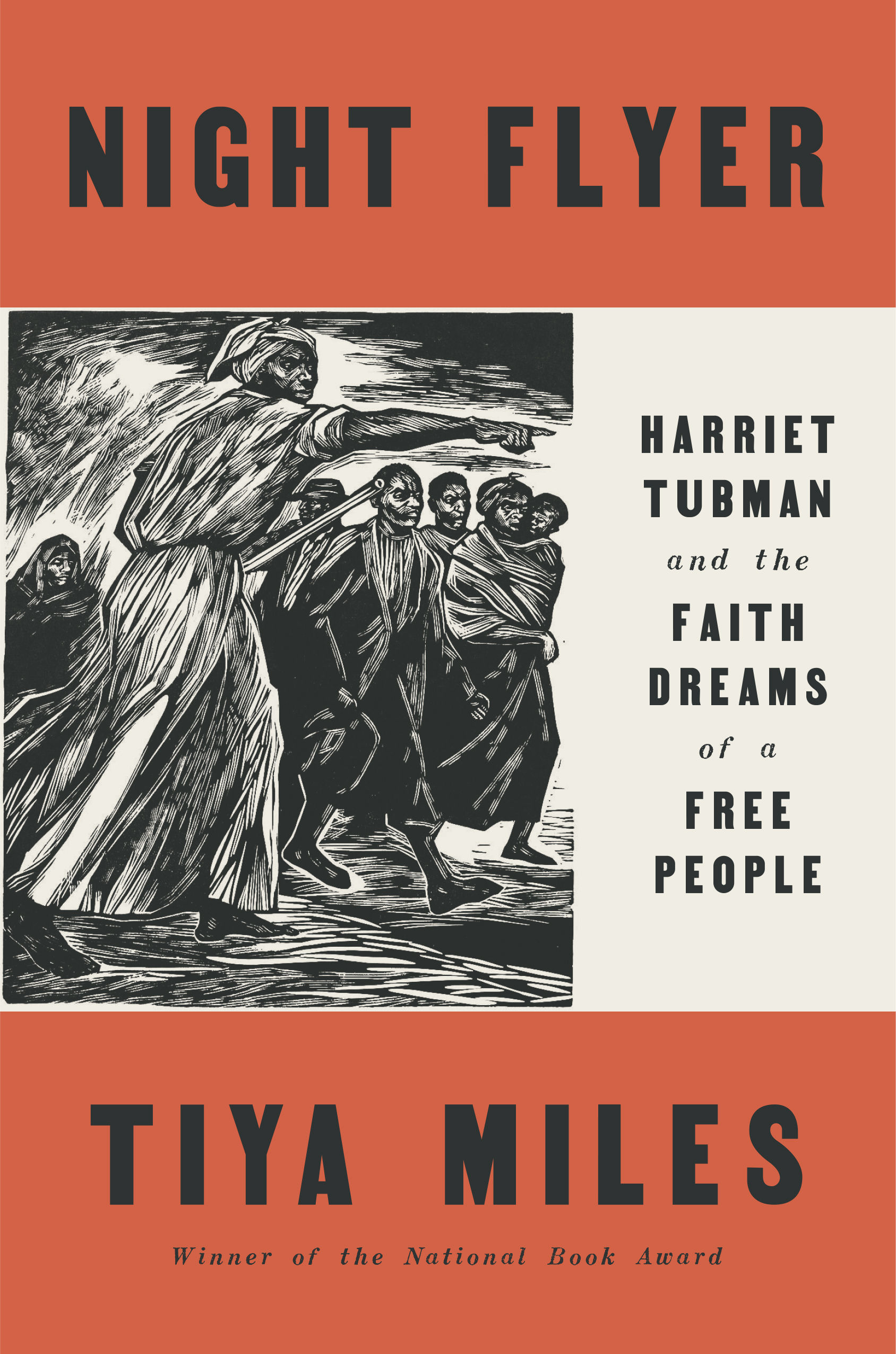
Night Flyer

Harriet Tubman is among the most famous Americans ever born and soon to be the face of the twenty-dollar bill. Yet often she’s a figure more out of myth than history, almost a comic-book superhero. Despite being barely five feet tall, unable to read, and suffering from a brain injury, she managed to escape from her own enslavement, return again and again to lead others north to freedom without loss of life, speak out powerfully against slavery, and then become the first American woman in history to lead a military raid, freeing some seven hundred people. You could almost say she’s America’s Robin Hood, a miraculous vision, often rightly celebrated but seldom understood.

Tiya Miles’s extraordinary Night Flyer changes all that. With her characteristic tenderness and imaginative genius, Miles explores beyond the stock historical grid to weave Tubman’s life into the fabric of her world. She probes the ecological reality of Tubman’s surroundings and examines her kinship with other enslaved women who similarly passed through a spiritual wilderness and recorded those travels in profound and moving memoirs. What emerges, uncannily, is a human being whose mysticism becomes more palpable the more we understand it—a story that offers us powerful inspiration for our own time of troubles. Harriet Tubman traversed many boundaries, inner and outer. Now, thanks to Tiya Miles, she becomes an even clearer and sharper signal from the past, one that can help us to echolocate a more just and sustainable path.
More Adult, Non-Juvenile Books

  • Harlem's Rattlers and the Great War delves into the history of the 369th Infantry Regiment, highlighting their fierce commitment to American ideals during World War I. This definitive study challenges the myths surrounding the unit, emphasizing their fight for equality amidst rampant racism. Through meticulous research, the authors reveal how these African American soldiers not only battled abroad but also sought to hold America accountable to its democratic promises.
  • How to Know a Person by David Brooks
    High Conflict: Why We Get Trapped and How We Get Out by Amanda Ripley When we are baffled by the insanity of the “other side”—in our politics, at work, or at home—it’s because we aren’t seeing how the conflict itself has taken over.That’s what “high conflict” does. It’s the invisible hand of our time. And it’s different from the useful friction of healthy conflict. That’s good conflict, and it’s a necessary force that pushes us to be better people.High conflict, by contrast, is what happens when discord distills into a good-versus-evil kind of feud, the kind with an us and a them. In this state, the normal rules of engagement no longer apply. The brain behaves differently. We feel increasingly certain of our own superiority and, at the same time, more and more mystified by the other side.New York Times bestselling author and award-winning journalist Amanda Ripley investigates how good people get captured by high conflict—and how they break free.
  • Housewife by Lisa Selin Davis challenges the outdated notion of the “breadwinner vs. homemaker” divide, arguing that women have been misled about the nature of family dynamics and motherhood. Through historical examples and cultural analysis, Davis advocates for a shift towards interdependence as the true American ideal, calling on all individuals to pursue liberation and the power to choose their own paths.
  • How to Know a Person by David Brooks
    How to Know a Person by David Brooks emphasizes the essential skill of deeply seeing others and making them feel valued and understood. By exploring questions about attention and conversation, Brooks offers insights from psychology, neuroscience, and various disciplines to foster connection in a fragmented society. This book serves as a guide for anyone seeking meaningful relationships and the joy that comes from truly understanding one another.