

Remarkably Bright Creatures
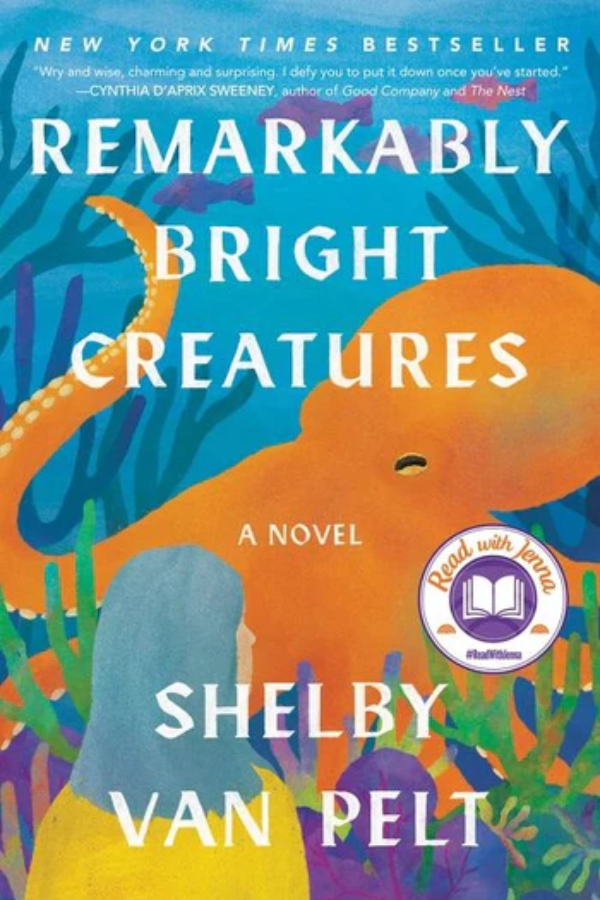
Dazzling and unexpected, Shelby Van Pelt’s debut novel, Remarkably Bright Creatures is set over the course of a summer in a fictional town on Puget Sound. This is a witty and warm tale of a widow’s friendship with a giant Pacific octopus reluctantly residing at the local aquarium—and the truths she finally uncovers about her son’s disappearance thirty years ago.
Tova Sullivan began mopping floors and tidying up on the night shift at the Sowell Bay Aquarium after her husband died. Keeping busy has always helped her cope, which she’s been doing since her eighteen-year-old son, Erik, mysteriously vanished on a boat in Puget Sound over thirty years ago. Finding the sea creatures around her easier to talk to than the humans in her life, Tova becomes acquainted with curmudgeonly Marcellus, a giant Pacific octopus living at the aquarium. Marcellus knows more than anyone can imagine but wouldn’t dream of lifting one of his eight arms for his human captors—until he forms an unlikely friendship with Tova. Ever the detective, Marcellus deduces what happened the night Tova’s son disappeared. As his affection for Tova grows, Marcellus must use every trick his old invertebrate body can muster to unearth the truth for her before it’s too late.