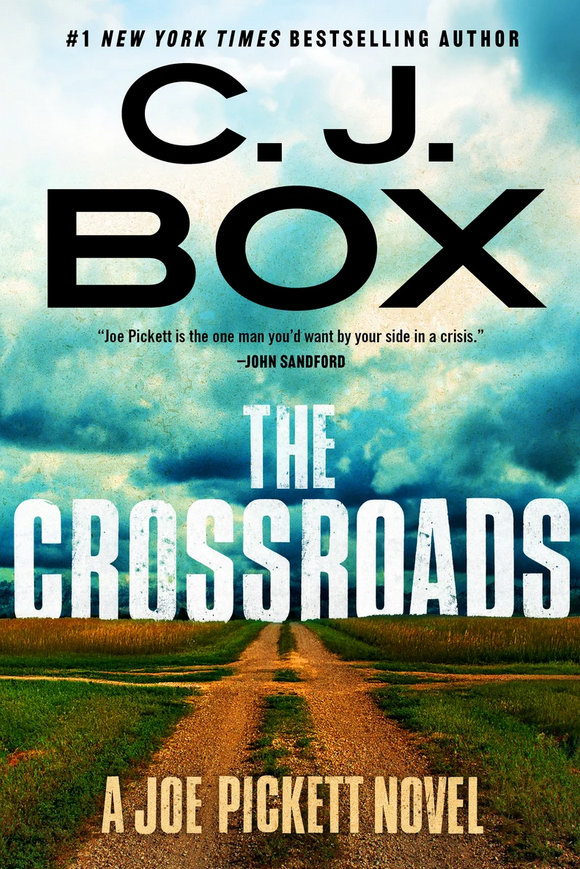
The Crossroads
The Invisible World

Return to Sender

Walt Longmire is back after the escapades of First Frost and encounters one of his most baffling cases in Wyoming’s brutal and unforgiving Red Desert.

When Blair McGowan, the mail person with the longest postal route in the country of over three hundred mile a day, goes missing the question becomes—where do you look for her? The Postal Inspector for the State of Wyoming elicits Sheriff Longmire to mount an investigation into her disappearance and Walt does everything but mail it in; posing as a letter-carrier himself, the good sheriff follows her trail and finds himself enveloped in the intrigue of an otherworldly cult.

Packed to the brim with twists and turns, the 21st novel in the New York Times bestselling Longmire series pushes Walt to his absolute limits, forcing him to wrestle with the impossible question: What good are your morals, if you’re marked for the dead letter office?
More Adult, Non-Juvenile Books

  • Night Flyer by Tiya Miles offers a profound exploration of Harriet Tubman's life, challenging the mythic status often ascribed to her. Through tender storytelling and imaginative insight, Miles intricately weaves Tubman’s journey into the ecological and spiritual landscapes surrounding her, revealing a complex human being whose mysticism resonates deeply with contemporary struggles for justice and freedom.
  • Eskimo and white culture collide in this national bestselling novel of life in the contemporary Alaskan wilderness.
  • In Our Migrant Souls, Pulitzer Prize–winning author HĂ©ctor Tobar offers a profound exploration of Latino identity in contemporary America. He addresses the historical and social forces shaping this identity while giving voice to the frustrations and aspirations of young Latinos, who have navigated a landscape marked by division and misunderstanding.
  • In Poverty, by America, Matthew Desmond explores the paradox of poverty in one of the wealthiest nations, revealing how affluent Americans contribute to the plight of the poor while benefiting from systemic inequalities. Through a blend of historical analysis and original reporting, Desmond argues for a collective effort to address poverty and envisions a future where shared prosperity and true freedom are attainable for all.