

The Essential Etheridge Knight
A Girl of the Limberlost

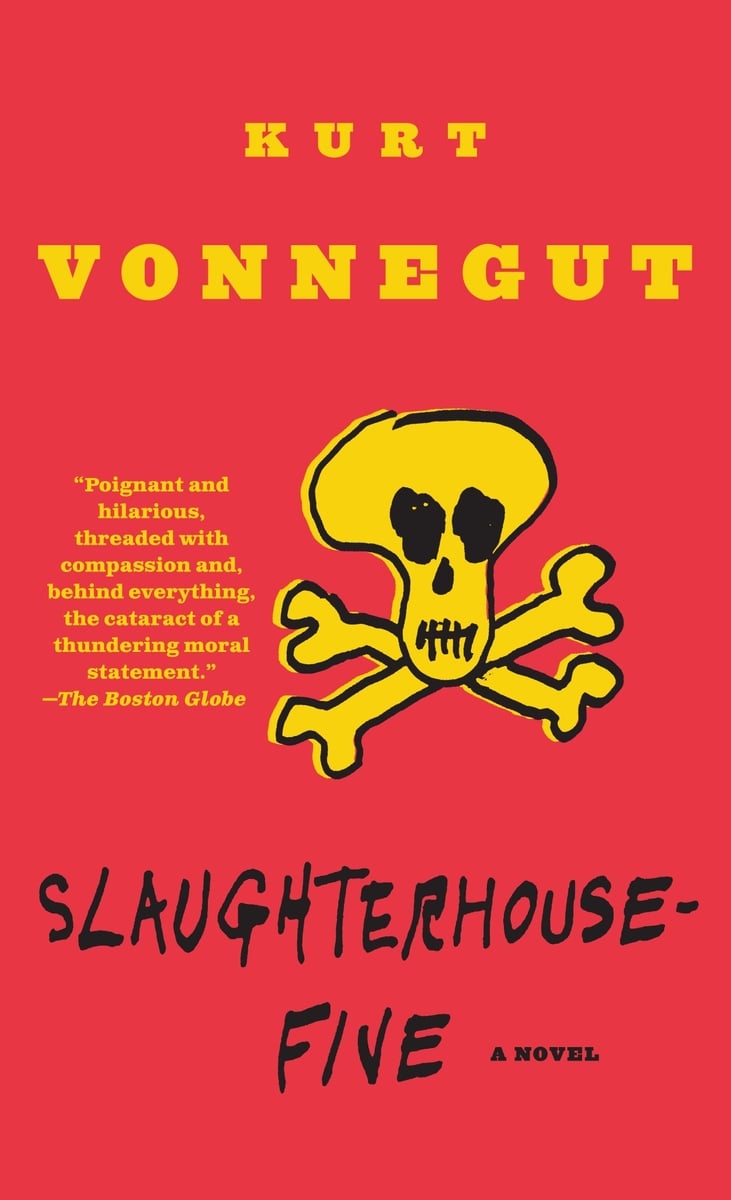
Slaughterhouse-Five

Kurt Vonnegut’s masterpiece, Slaughterhouse-Five is “a desperate, painfully honest attempt to confront the monstrous crimes of the twentieth century” (Time).

Selected by the Modern Library as one of the 100 best novels of all time • One of The Atlantic’s Great American Novels of the Past 100 Years

Slaughterhouse-Five, an American classic, is one of the world’s great antiwar books. Centering on the infamous World War II firebombing of Dresden, the novel is the result of what Kurt Vonnegut described as a twenty-three-year struggle to write a book about what he had witnessed as an American prisoner of war. It combines historical fiction, science fiction, autobiography, and satire in an account of the life of Billy Pilgrim, a barber’s son turned draftee turned optometrist turned alien abductee. As Vonnegut had, Billy experiences the destruction of Dresden as a POW. Unlike Vonnegut, he experiences time travel, or coming “unstuck in time.”

An instant bestseller, Slaughterhouse-Five made Kurt Vonnegut a cult hero in American literature, a reputation that only strengthened over time, despite his being banned and censored by some libraries and schools for content and language. But it was precisely those elements of Vonnegut’s writing—the political edginess, the genre-bending inventiveness, the frank violence, the transgressive wit—that have inspired generations of readers not just to look differently at the world around them but to find the confidence to say something about it. Authors as wide-ranging as Norman Mailer, John Irving, Michael Crichton, Tim O’Brien, Margaret Atwood, Elizabeth Strout, David Sedaris, Jennifer Egan, and J. K. Rowling have all found inspiration in Vonnegut’s words. Jonathan Safran Foer has described Vonnegut as “the kind of writer who made people—young people especially—want to write.” George Saunders has declared Vonnegut to be “the great, urgent, passionate American writer of our century, who offers us . . . a model of the kind of compassionate thinking that might yet save us from ourselves.”

More than fifty years after its initial publication at the height of the Vietnam War, Vonnegut’s portrayal of political disillusionment, PTSD, and postwar anxiety feels as relevant, darkly humorous, and profoundly affecting as ever, an enduring beacon through our own era’s uncertainties.
More Adult, Non-Juvenile Books

  • Harlem's Rattlers and the Great War delves into the history of the 369th Infantry Regiment, highlighting their fierce commitment to American ideals during World War I. This definitive study challenges the myths surrounding the unit, emphasizing their fight for equality amidst rampant racism. Through meticulous research, the authors reveal how these African American soldiers not only battled abroad but also sought to hold America accountable to its democratic promises.
  • How to Know a Person by David Brooks
    High Conflict: Why We Get Trapped and How We Get Out by Amanda Ripley When we are baffled by the insanity of the “other side”—in our politics, at work, or at home—it’s because we aren’t seeing how the conflict itself has taken over.That’s what “high conflict” does. It’s the invisible hand of our time. And it’s different from the useful friction of healthy conflict. That’s good conflict, and it’s a necessary force that pushes us to be better people.High conflict, by contrast, is what happens when discord distills into a good-versus-evil kind of feud, the kind with an us and a them. In this state, the normal rules of engagement no longer apply. The brain behaves differently. We feel increasingly certain of our own superiority and, at the same time, more and more mystified by the other side.New York Times bestselling author and award-winning journalist Amanda Ripley investigates how good people get captured by high conflict—and how they break free.
  • Housewife by Lisa Selin Davis challenges the outdated notion of the “breadwinner vs. homemaker” divide, arguing that women have been misled about the nature of family dynamics and motherhood. Through historical examples and cultural analysis, Davis advocates for a shift towards interdependence as the true American ideal, calling on all individuals to pursue liberation and the power to choose their own paths.
  • How to Know a Person by David Brooks
    How to Know a Person by David Brooks emphasizes the essential skill of deeply seeing others and making them feel valued and understood. By exploring questions about attention and conversation, Brooks offers insights from psychology, neuroscience, and various disciplines to foster connection in a fragmented society. This book serves as a guide for anyone seeking meaningful relationships and the joy that comes from truly understanding one another.