
Ordinary Wolves
Two Old Women

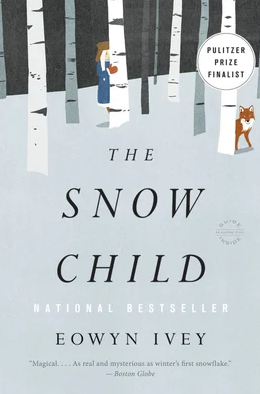
The Snow Child

Alaska, 1920: a brutal place to homestead, and especially tough for recent arrivals Jack and Mabel. Childless, they are drifting apart — he breaking under the weight of the work of the farm; she crumbling from loneliness and despair. In a moment of levity during the season’s first snowfall, they build a child out of snow. The next morning the snow child is gone — but they glimpse a young, blonde-haired girl running through the trees.

This little girl, who calls herself Faina, seems to be a child of the woods. She hunts with a red fox at her side, skims lightly across the snow, and somehow survives alone in the Alaskan wilderness. As Jack and Mabel struggle to understand this child who could have stepped from the pages of a fairy tale, they come to love her as their own daughter. But in this beautiful, violent place things are rarely as they appear, and what they eventually learn about Faina will transform all of them.
More Adult, Non-Juvenile Books

  • Night Flyer by Tiya Miles offers a profound exploration of Harriet Tubman's life, challenging the mythic status often ascribed to her. Through tender storytelling and imaginative insight, Miles intricately weaves Tubman’s journey into the ecological and spiritual landscapes surrounding her, revealing a complex human being whose mysticism resonates deeply with contemporary struggles for justice and freedom.
  • Eskimo and white culture collide in this national bestselling novel of life in the contemporary Alaskan wilderness.
  • In Our Migrant Souls, Pulitzer Prize–winning author HĂ©ctor Tobar offers a profound exploration of Latino identity in contemporary America. He addresses the historical and social forces shaping this identity while giving voice to the frustrations and aspirations of young Latinos, who have navigated a landscape marked by division and misunderstanding.
  • In Poverty, by America, Matthew Desmond explores the paradox of poverty in one of the wealthiest nations, revealing how affluent Americans contribute to the plight of the poor while benefiting from systemic inequalities. Through a blend of historical analysis and original reporting, Desmond argues for a collective effort to address poverty and envisions a future where shared prosperity and true freedom are attainable for all.