

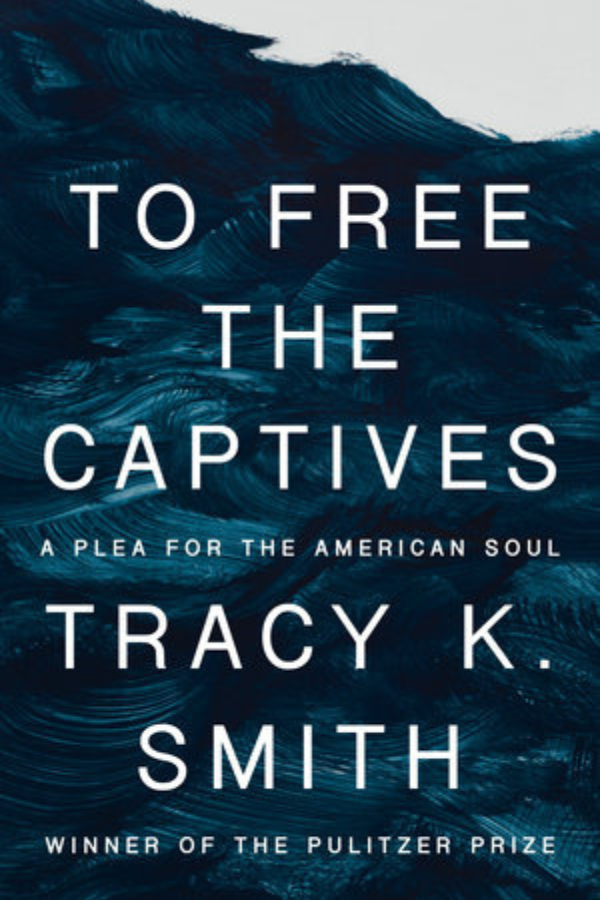
To Free the Captives: A Plea for the American Soul
A TIME AND WASHINGTON POST BEST BOOK OF THE YEAR – The New York Times Book Review Editors’ Choice – A stunning personal manifesto on memory, family, and history that explores how we in America might–together–come to a new view of our shared past “A vulnerable, honest look at a life lived in a country still struggling with its evils…Hopeful…Beautiful and haunting.” –Eddie S. Glaude Jr., author of Begin Again
In 2020, heartsick from constant assaults on Black life, Tracy K. Smith found herself soul-searching and digging into the historical archive for help navigating the “din of human division and strife.” With lyricism and urgency, Smith draws on several avenues of thinking–personal, documentary, and spiritual–to understand who we are as a nation and what we might hope to mean to one another.
In Smith’s own words, “To write a book about Black strength, Black continuance, and the powerful forms of belief and community that have long bolstered the soul of my people, I used the generations of my own patrilineal family to lean backward toward history, to gather a fuller sense of the lives my own ancestors led, the challenges they endured, and the sources of hope and bolstering they counted on. What this process has led me to believe is that all of us, in the here and now, can choose to work alongside the generations that precede us in tending to America’s oldest wounds and meeting the urgencies of our present.”
To Free the Captives touches down in Sunflower, Alabama, the red-dirt town where Smith’s father’s family comes from, and where her grandfather returned after World War I with a hero’s record but difficult prospects as a Black man. Smith considers his life and the life of her father through the lens of history. Hoping to connect with their strength and continuance, she assembles a new terminology of American life.
Bearing courageous witness to the terms of Freedom afforded her as a Black woman, a mother, and an educator in the twenty-first century, Smith etches a portrait of where we find ourselves four hundred years into the American experiment. Weaving in an account of her growing spiritual practice, she argues that the soul is not merely a private site of respite or transcendence, but a tool for fulfilling our duties to each other, and a sounding board for our most pressing collective questions: Where are we going as a nation? Where have we been?