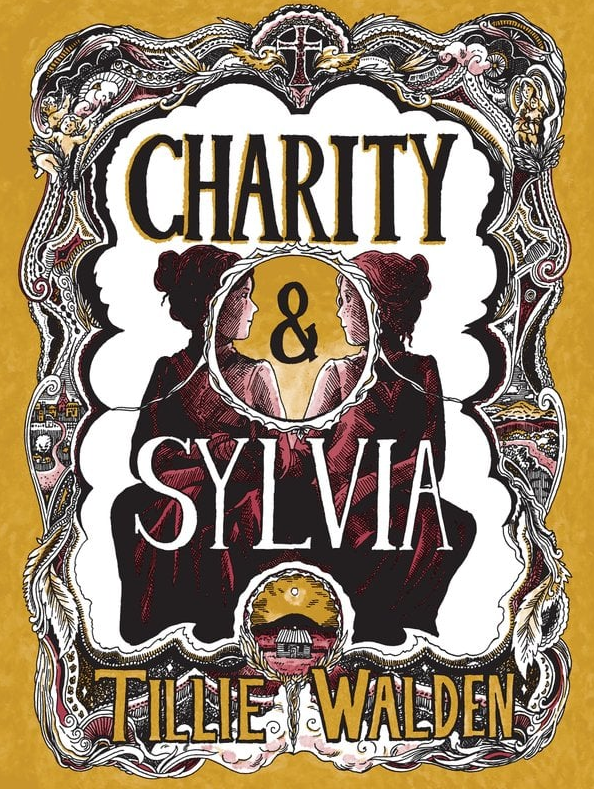
Charity and Sylvia
An openly Lesbian couple survives and thrives in 19th century Vermont–a true story, as told by Tillie Walden
The month is February in the year 1807. The place is Weybridge, Vermont: small, cold, lonely, and beautiful. Sylvia Drake is exhausted. As an unwed woman with few prospects, she is residing with and caring for her sister’s rambunctious family. Today the house is abuzz awaiting a guest—Charity Bryant. A friend of the family, she is most known for her elegant letters, with their swoopy and evocative penmanship and carefully chosen prose. But Charity’s visit is a guise, she is coming to Vermont to start over after heartbreak and rumours—so many rumours—that have grown too loud back in Massachusetts.
Being openly gay in 19th century New England is not an easy row to hoe. But Charity can only be herself, and she immediately catches—and holds—the eye of none other than Sylvia Drake. From this point on, for 44 years, the two would be inseparable, building a life together despite all odds and living as a lesbian couple in small town Vermont.
The true, exceptional story of these remarkable women is brought to life with humor and passion by the unparalleled and award-winning Tillie Walden (Spinning, On A Sunbeam). We see America grow alongside these women over a period that brings about the railroad, many novels, 14 Presidents, riots, rebellion, plagues, and poetry. Based on extensive archives of their writing, Charity and Sylvia is a groundbreaking biography that is also the story of 19th century America.