
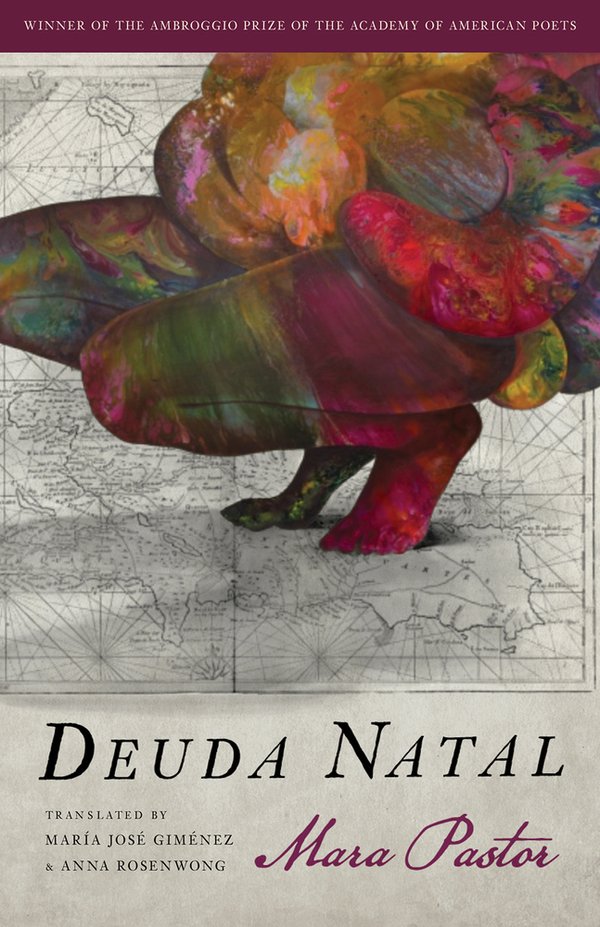
Deuda Natal
Deuda Natal finds the beauty within vulnerability and the dignity amidst precariousness. As one of the most prominent voices in Puerto Rican poetry, Mara Pastor uses the poems in this new bilingual collection to highlight the way that fundamental forms of caring for life–and for language–can create a space of poetic decolonization. The poems in Deuda Natal propose new ways of understanding as they traverse a thematic landscape of women’s labor, the figure of the nomad and immigrant, and the return from economic exile to confront the catastrophic confluence of disaster and disaster capitalism.
The poems in Deuda Natal reckon with the stark environmental degradation in Puerto Rico and the larger impacts of global climate change as they navigate our changing world through a feminist lens. Pastor’s work asserts a feminist objection to our society’s obsession with production and the accumulation of wealth, offering readers an opportunity for collective vulnerability within these pages. For this remarkable work, Pastor has found unique allies in María José Giménez and Anna Rosenwong, the translators of Deuda Natal. Winner of the 2020 Ambroggio Prize of the Academy of American Poets, this collection showcases masterfully crafted and translated poems that are politically urgent and emotionally striking.