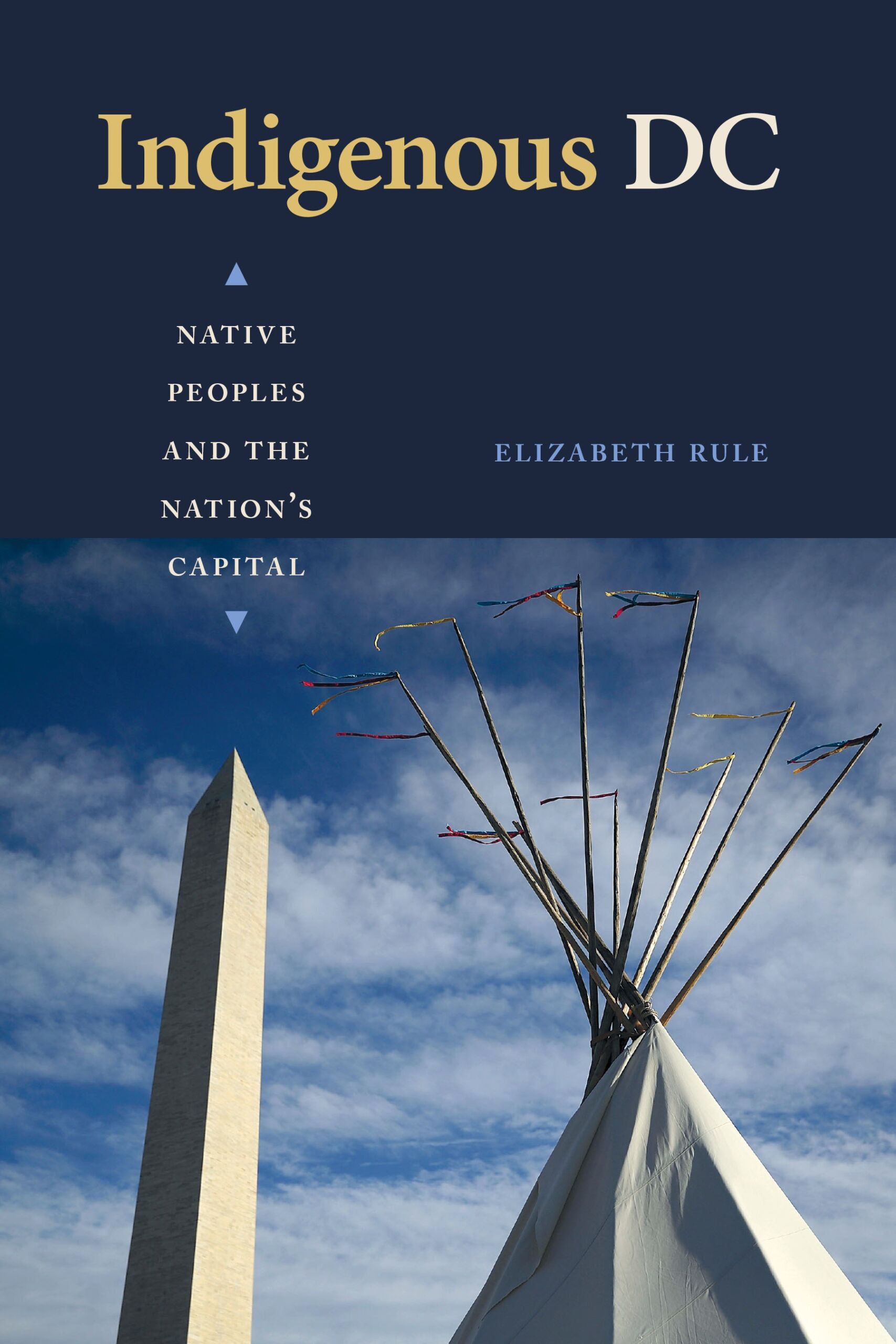
Indigenous DC: Native Peoples and the Nation’s Capital
Washington, DC, is Indian land, but Indigenous peoples are often left out of the national narrative. To redress this myth of invisibility, Indigenous DC by Elizabeth Rule shines a light upon the contributions of Indigenous tribal leaders and politicians, artists and activists to the rich history of the District of Columbia.
Inspired by Rule’s award-winning public history mobile app and decolonial mapping project, Guide to Indigenous DC, this book underscores that all land is Native land through a narrative arc that encompasses an account of the original inhabitants who call the District their traditional territory and members of the Indigenous diaspora who have made community in the U.S. capital. Rule maps and analyzes both historical and contemporary sites of Indigenous importance, including Theodore Roosevelt Island, the land upon which the Nacotchtank community sought refuge from encroaching urban development in the mid-17th century; the White House lawn, where archaeological materials from the Archaic and Woodlands periods were excavated; and Anacostia and the Potomac, whose names have their roots in Indigenous languages. Published by Georgetown University Press