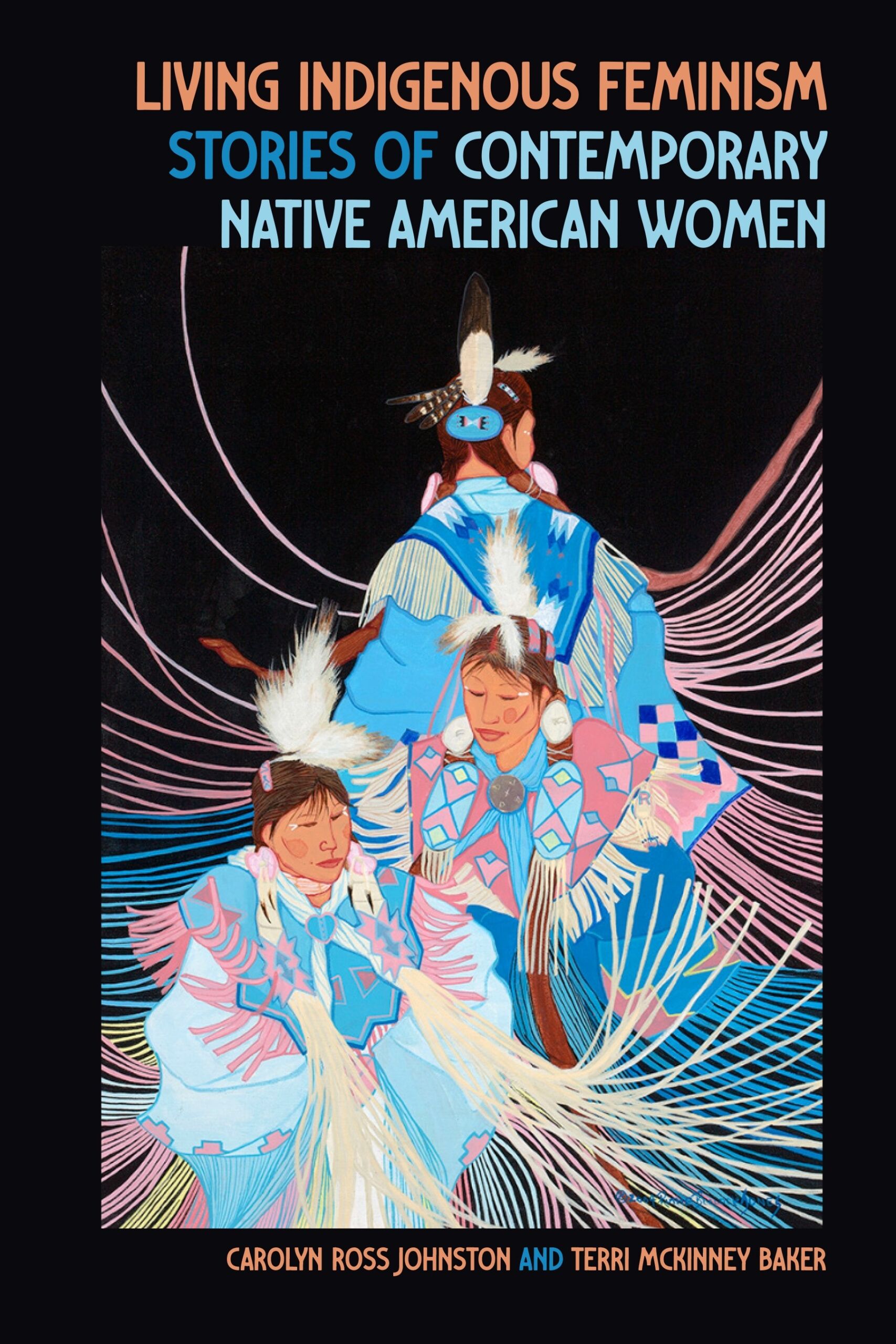
Living Indigenous Feminism: Stories of Contemporary Native American Women
Living Indigenous Feminism is a bricolage of historical research and historiography, poetry, interviews, biographies, memoirs, and stories–both traditional and contemporary. This book poses the question of what southern and western history would look like if viewed through the eyes of a diverse sample of Indigenous women. The answer is that these Indigenous women have been “living feminism” in ways that shed new light on these histories, while showing how their lives and visions can offer fresh guidance for turbulent present and the shared future we are making now. Published by University of Georgia Press
This book features Native women of many different nations, cultures, and regions, including Cherokee, Choctaw, Comanche, Seminole, Seneca, Iroquois, Navajo, Salish and Kootenai, Kiowa, Muscogee, Creek, Yankton Dakota Sioux, Fort Sill Apache, Cheyenne, Red Lake Ojibwe, Ho-Chunk, Seneca, Tonawanda Band, Standing Rock Sioux, Lakota Sioux, Blackfeet, Laguna Pueblo, and San Ildefonso Pueblo. Indigenous women, the authors contend, have always lived a pattern of gender power and balance. Indigenous feminism is traditional, and at the same time, a source of fresh insights about how we can sustain balanced, inclusive, meaningful lives through times of challenge and change.
Although traditional academic scholarship is an individualistic and solitary venture, this approach is relational and organic, with the living Indigenous women who shared their stories with them and with the Indigenous women who lived before them, whom the authors met on the pages of scattered historical records. Their stories suggest powerful new meanings to what “living feminism” can do when we do it together. Published by University of Georgia Press