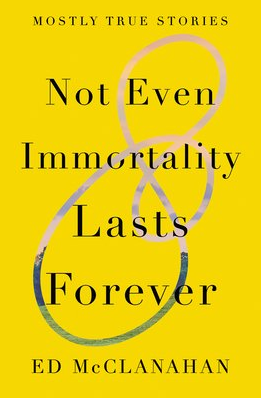
Not Even Immortality Lasts Forever
A good story has a mind of its own; it seeks its truth the way water seeks its own level. But where is the line between memory and imagination, between nonfiction and the telling of a good story? In the mostly true stories that make up Not Even Immortality Lasts Forever, Ed McClanahan intrepidly tests the limits of that distinction.
This gathering of fiction–infused autobiographical stories opens in the postwar 1940s with the sudden, brief appearance of an itinerant street performer in McClanahan’s sleepy rural Kentucky hometown, an elderly bicyclist whose artistry seems, to the fourteen–year–old narrator, almost divinely inspired. Subsequent stories trace McClanahan’s uneasy but ultimately tender relationship with his no–nonsense “”bidnessman”” father and, simultaneously, his growing awareness of his own calling as a writer. McClanahan writes his way into the fabled Stanford University Creative Writing Program and forms lasting friendships with Ken Kesey and his then–notorious cohort, the Merry Pranksters.
After returning to Kentucky in the 1970s, McClanahan published his long–awaited novel, The Natural Man, in 1983, the first of seven well–received books. In 2019, he was inducted into the Kentucky Writers Hall of Fame.