

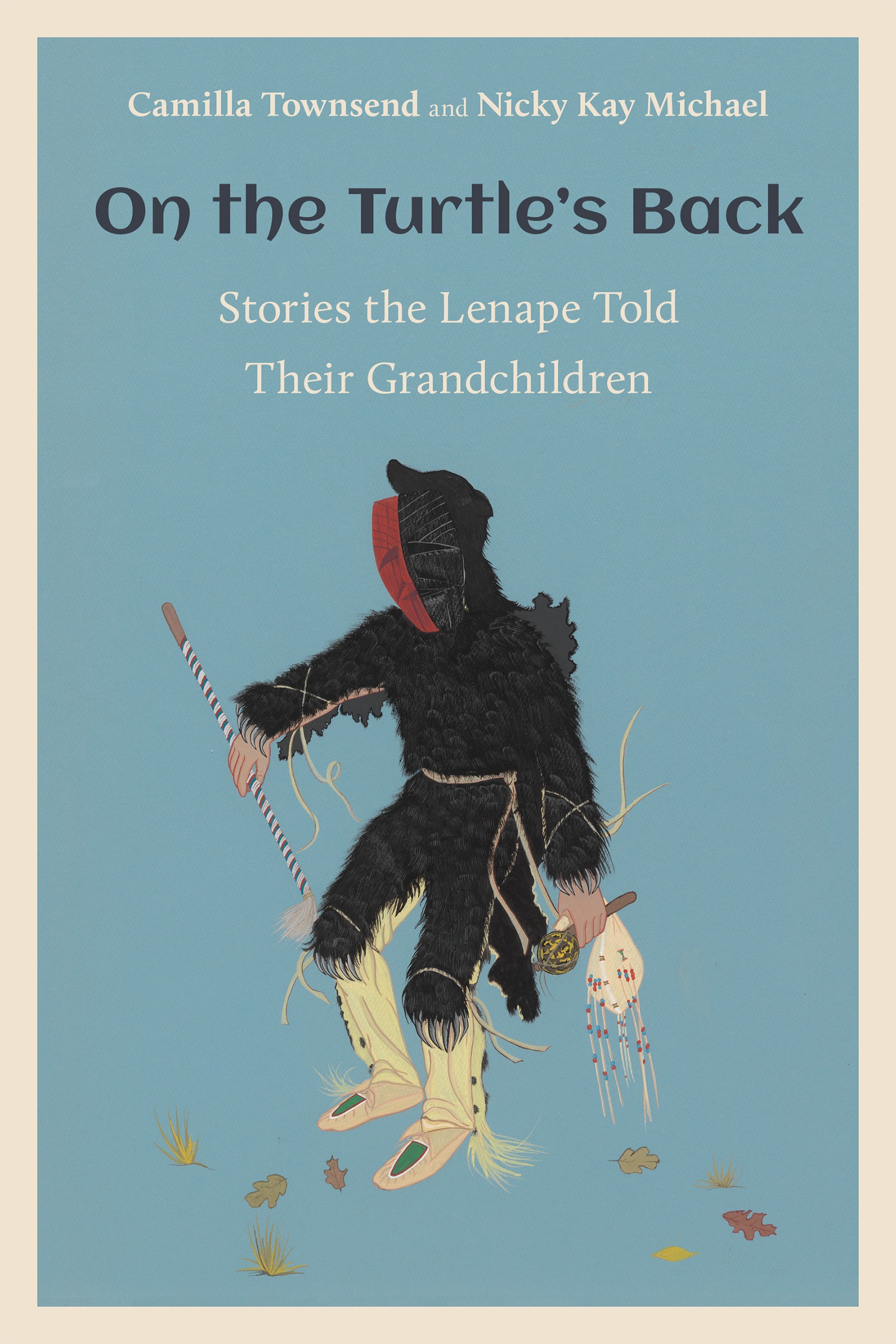
On the Turtle’s Back: Stories the Lenape Told Their Grandchildren
The Lenape tribe, also known as the Delaware Nation, lived for centuries on the land that English colonists later called New Jersey. But once America gained its independence, they were forced to move further west: to Indiana, then Missouri, and finally to the territory that became Oklahoma. These reluctant migrants were not able to carry much from their ancestral homeland, but they managed to preserve the stories that had been passed down for generations.
On the Turtle’s Back is the first collection of Lenape folklore, originally compiled by anthropologist M. R. Harrington over a century ago but never published until now. In it, the Delaware share their cherished tales about the world’s creation, epic heroes, and ordinary human foibles. It features stories told to Harrington by two Lenape couples, Julius and Minnie Fouts and Charles and Susan Elkhair, who sought to officially record their legends before their language and cultural traditions died out. More recent interviews with Lenape elders are also included, as their reflections on hearing these stories as children speak to the status of the tribe and its culture today. Together, they welcome you into their rich and wondrous imaginative world. Published by Rutgers University Press