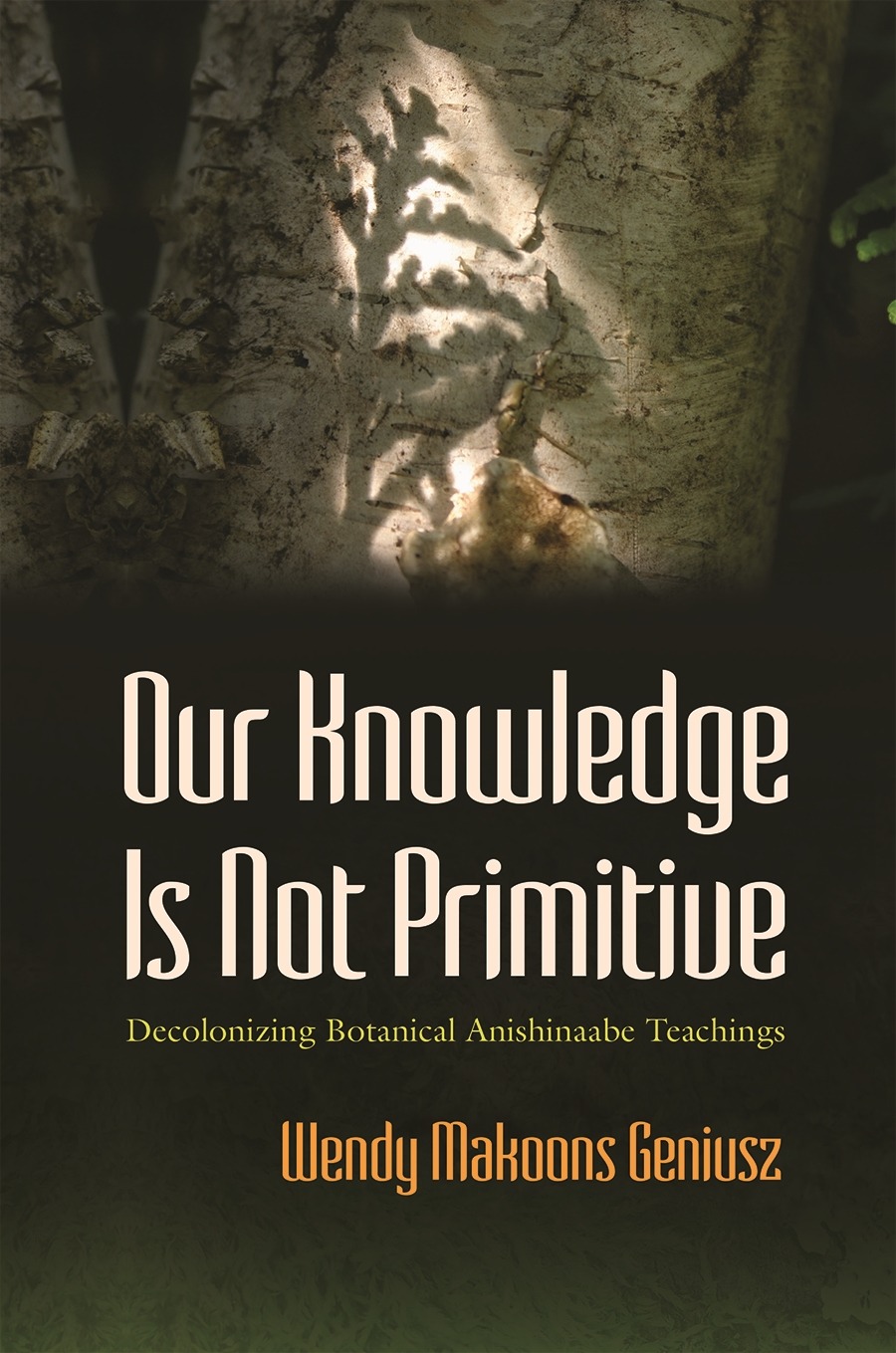
Our Knowledge Is Not Primitive: Decolonizing Botanical Anishinaabe Teaching
Traditional Anishinaabe (Ojibwe or Chippewa) knowledge, like the knowledge systems of indigenous peoples around the world, has long been collected and presented by researchers who were not a part of the culture they observed. The result is a colonized version of the knowledge, one that is distorted and trivialized by an ill-suited Eurocentric paradigm of scientific investigation and classification. In Our Knowledge Is Not Primitive, Wendy Makoons Geniusz contrasts the way in which Anishinaabe botanical knowledge is presented in the academic record with how it is preserved in Anishinaabe culture. In doing so she seeks to open a dialogue between the two communities to discuss methods for decolonizing existing texts and to develop innovative approaches for conducting more culturally meaningful research in the future.
As an Anishinaabe who grew up in a household practicing traditional medicine and who went on to become a scholar of American Indian studies and the Ojibwe language, Geniusz possesses the authority of someone with a foot firmly planted in each world. Her unique ability to navigate both indigenous and scientific perspectives makes this book an invaluable contribution to the field of Native American studies and enriches our understanding of the Anishinaabe and other native communities. Published by Syracuse Univeristy Press