


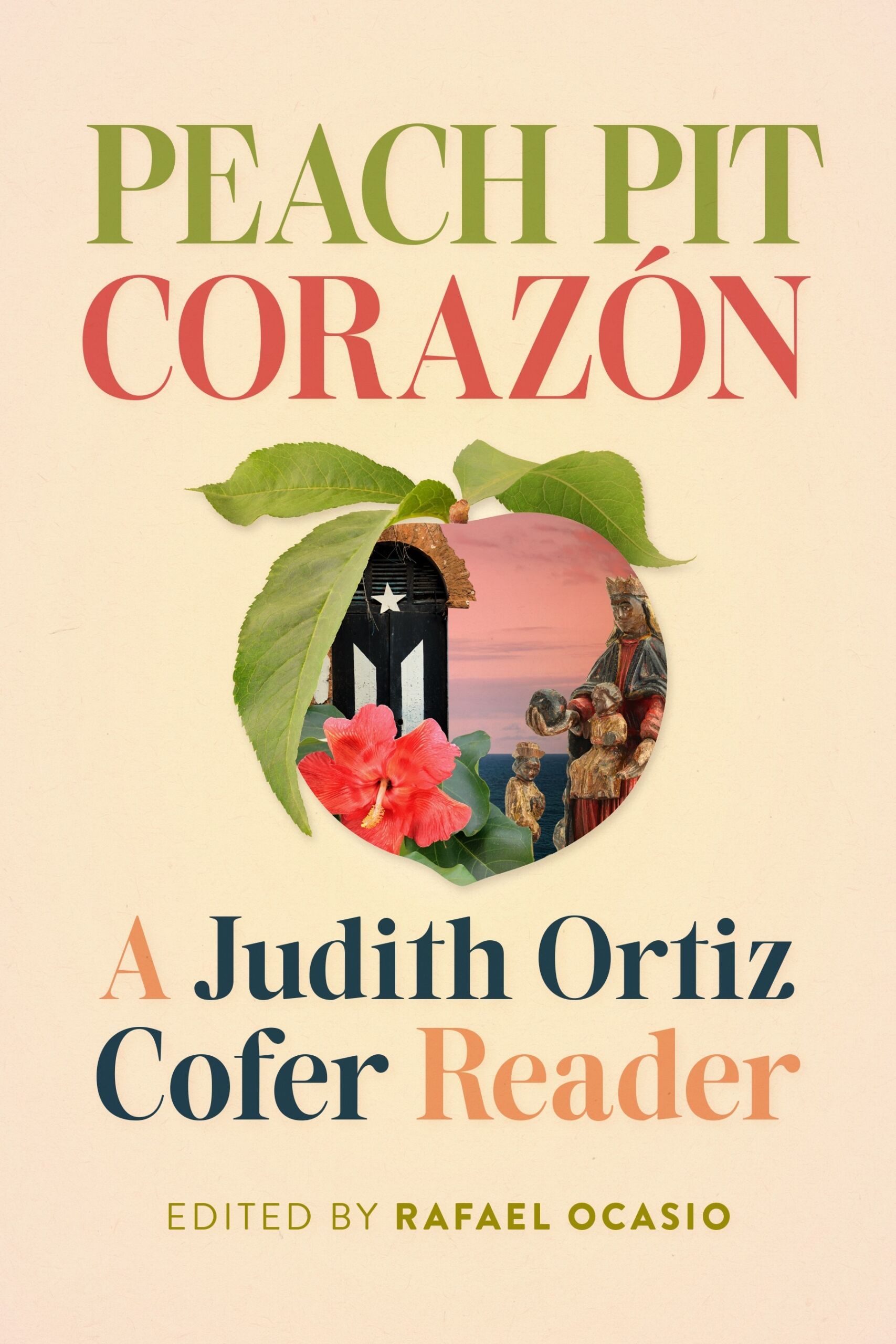
Peach Pit Corazon
Judith Ortiz Cofer (1952-2016), a prominent Latina writer, was, among various recognitions, nominated for a Pulitzer Prize for her 1989 first novel, The Line of the Sun (Georgia); awarded the coveted O. Henry Prize for her short story “The Latin Deli” in 1994; and inducted into the Georgia Writer’s Hall of Fame in 2010. Beginning her literary career as a poet, Ortiz Cofer was a prolific writer of novels, short stories, and creative nonfiction essays, often inspired by her diverse cultural background. She was born in Hormigueros, Puerto Rico, and moved to Paterson, New Jersey, as a child in the mid-1950s. In Paterson, she witnessed the rise of a Puerto Rican community. During her early teenage years, her family left for Augusta, Georgia, the state where she put down roots. She joined the English Department at the University of Georgia in 1984, eventually being named the Franklin Professor of English and Creative Writing, before retiring from teaching in 2014. Her work often engaged with the intersections of the various geographies, cultures, and languages of the places she called home throughout her life.
Rafael Ocasio’s critical introduction and commentary on representative literary pieces are guided by interviews conducted during his twenty-seven-year friendship with Ortiz Cofer. One common subject of their conversations, as they joked, was labeling themselves as “Georgia Ricans.” From a temporal hindsight point of view, as a Georgia Rican writer, Ortiz Cofer recalls events that led to her rise as a Latina writer who was celebratory of a Latinx identity, a multiethnic community that comprised a range of socioeconomic backgrounds, while also being critical of their traditional binary concepts pertaining to gender and sexual orientations.
Publisher: University of Georgia Press