


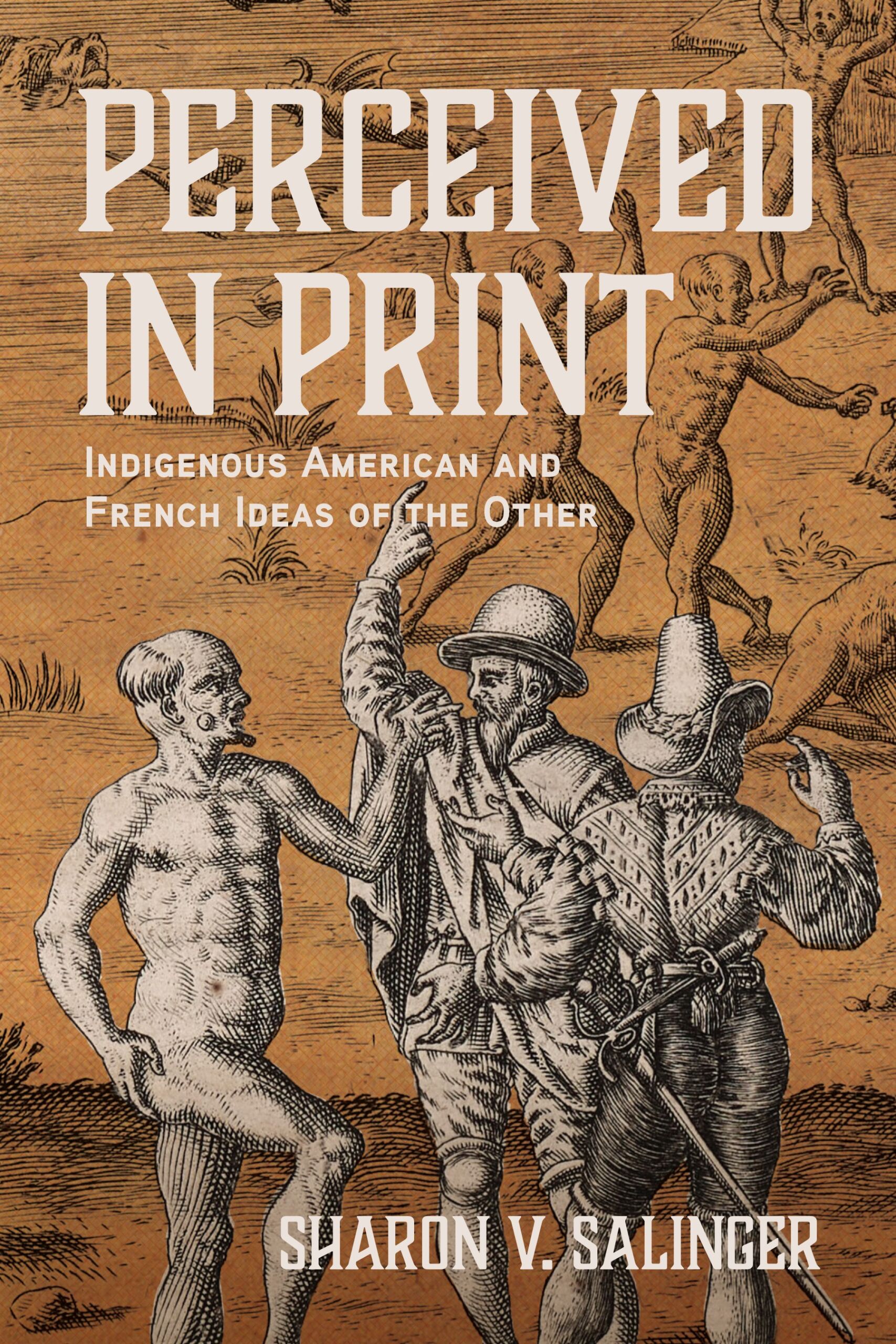
Perceived in Print: Indigenous American and French Ideas of the Other
Perceived in Print uses the published writings of adventurers and churchmen in the sixteenth and early seventeenth centuries to unlock the impressions Americans and French expressed about each other–what people from a diverse range of Indigenous cultures thought about the French and how the French perceived the inhabitants of these New Lands. Straddling history and literary studies, Sharon Salinger peels away how European authors cast the exchanges to reveal a “dialogue between cultures.” What emerges are two groups of equal standing, motivated by different cultural impulses.
As Salinger shows, French assessments were often contradictory: the Natives were cannibals, but also noble; they were without religion but also devil worshipers. At the same time, Indigenous Americans hurled a range of critiques toward the French, from mocking the absurdity of French clothing to articulately rejecting assimilation and Christianity, even with its promise of heaven. In the end, Salinger reveals a cultural dissonance that portended the failure of the French ambition to transform the Americas into a “New France.” Published by University of Virginia Press