

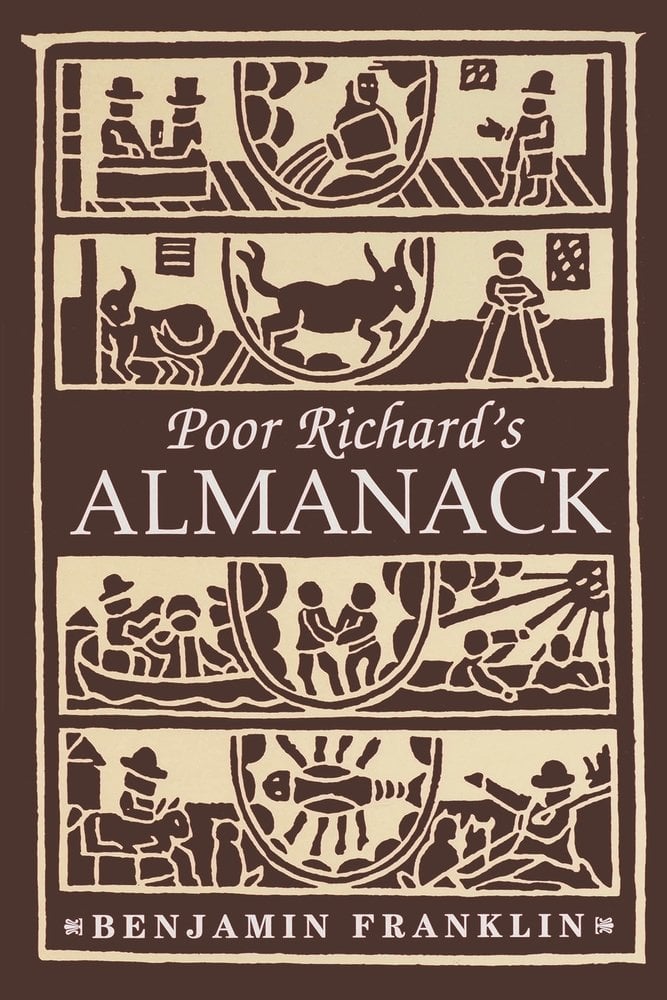
Poor Richard’s Almanack
Are you ready to embark on a captivating journey through the corridors of history? Look no further than Benjamin Franklin’s iconic masterpiece: Poor Richard’s Almanac. This literary gem, lovingly curated and meticulously typeset, awaits your eager eyes.
Why Should You Dive into Poor Richard’s Almanac?
- A Treasury of Aphorisms: Picture this-a sun-drenched morning, a steaming cup of coffee, and the delightful company of Franklin’s aphorisms. These pithy, thought-provoking sayings have transcended time, weaving themselves into the very fabric of American English. From the bustling streets of colonial America to your cozy reading nook, these maxims counsel thrift, courtesy, and a dash of delightful cynicism.
- A Portal to the Past: Imagine flipping through the pages of an almanac that once graced the hands of our founding fathers. Poor Richard’s Almanac isn’t just a book; it’s a time machine. It whisks you away to an era when quills scratched parchment, and wisdom flowed like ink. As you read, you’ll feel the pulse of history-the heartbeat of a nation striving for progress.
- Practical Wisdom for Today: Franklin’s almanac isn’t a relic gathering dust. No, it’s a living, breathing companion. Within its covers, you’ll find advice that resonates across centuries. Whether you’re pondering financial decisions, navigating relationships, or simply seeking a dose of wit, Poor Richard has your back. His aphorisms are like old friends-reliable, comforting, and eternally relevant.
- A Symphony of Words: Franklin’s wordplay dances across the pages. His sentences are like finely tuned instruments, playing melodies of industry, frugality, and human nature. Each aphorism is a gem, polished by time and wisdom. And guess what? You get hundreds of them! From the mundane to the profound, they’ll leave you nodding in agreement or chuckling knowingly.