

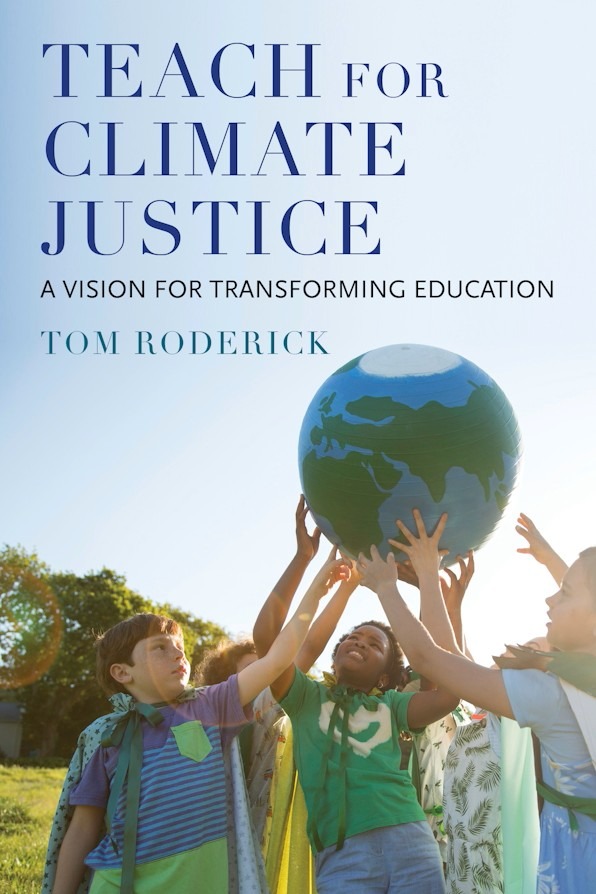
Teach for Climate Justice: A Vision for Transforming Education
In Teach for Climate Justice, accomplished educator and social and emotional learning expert Tom Roderick proposes a visionary interdisciplinary and intersectional approach to PreK-12 climate education. He argues that meaningful instruction on this urgent issue of our time must focus on climate justice–the convergence of climate change and social justice–in a way that is emotionally safe, developmentally appropriate, and ultimately empowering.
Drawing on examples of real-life educators teaching climate change, Roderick identifies eight key dimensions of climate education that will prepare students to face the challenges of the climate crisis and give them the means to take action. These dimensions include not only educating for a deep understanding of the scientific, geopolitical, and socioeconomic equity issues that surround global warming, but also cultivating appreciation for the environment, building a supportive community, and fostering active hope for the future. Roderick’s intentional layering of skills will help students develop the knowledge and sense of agency necessary to engage in civil resistance and nonviolent activism. In support of this crucial endeavor, Roderick suggests evidence-based teaching strategies, practices that promote inclusivity, and tools for social and emotional learning.
This timely and uplifting book lays out a powerful vision for teaching, learning, and curriculum development to nurture a generation of courageous, informed advocates for climate justice.