

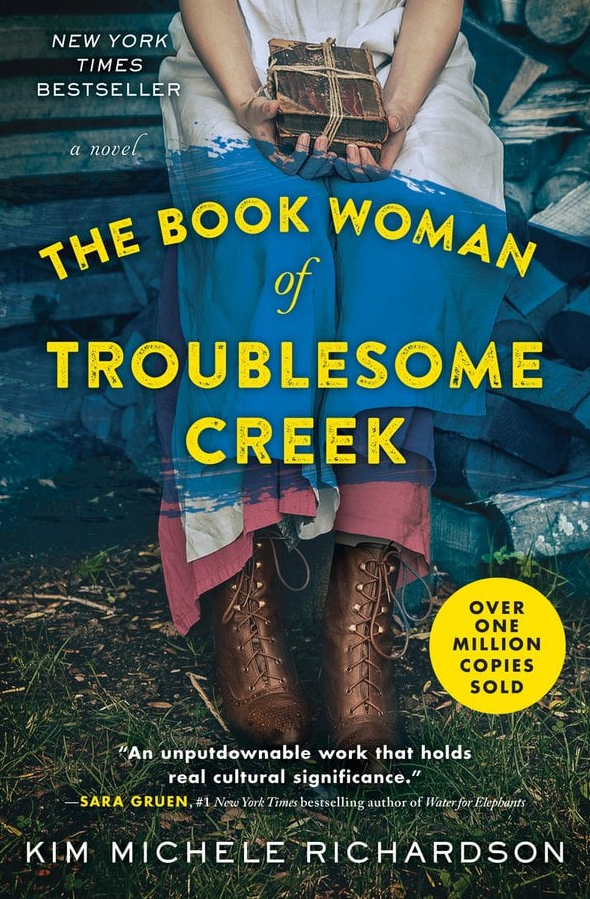
The Book Woman of Troublesome Creek
The bestselling historical fiction novel from Kim Michele Richardson, this is a novel following Cussy Mary, a packhorse librarian and her quest to bring books to the Appalachian community she loves, perfect for readers of William Kent Kreuger and Lisa Wingate. The perfect addition to your next book club!
The hardscrabble folks of Troublesome Creek have to scrap for everything–everything except books, that is. Thanks to Roosevelt’s Kentucky Pack Horse Library Project, Troublesome’s got its very own traveling librarian, Cussy Mary Carter.
Cussy’s not only a book woman, however, she’s also the last of her kind, her skin a shade of blue unlike most anyone else. Not everyone is keen on Cussy’s family or the Library Project, and a Blue is often blamed for any whiff of trouble. If Cussy wants to bring the joy of books to the hill folks, she’s going to have to confront prejudice as old as the Appalachias and suspicion as deep as the holler.
Inspired by the true blue-skinned people of Kentucky and the brave and dedicated Kentucky Pack Horse library service of the 1930s, The Book Woman of Troublesome Creek is a story of raw courage, fierce strength, and one woman’s belief that books can carry us anywhere–even back home.