

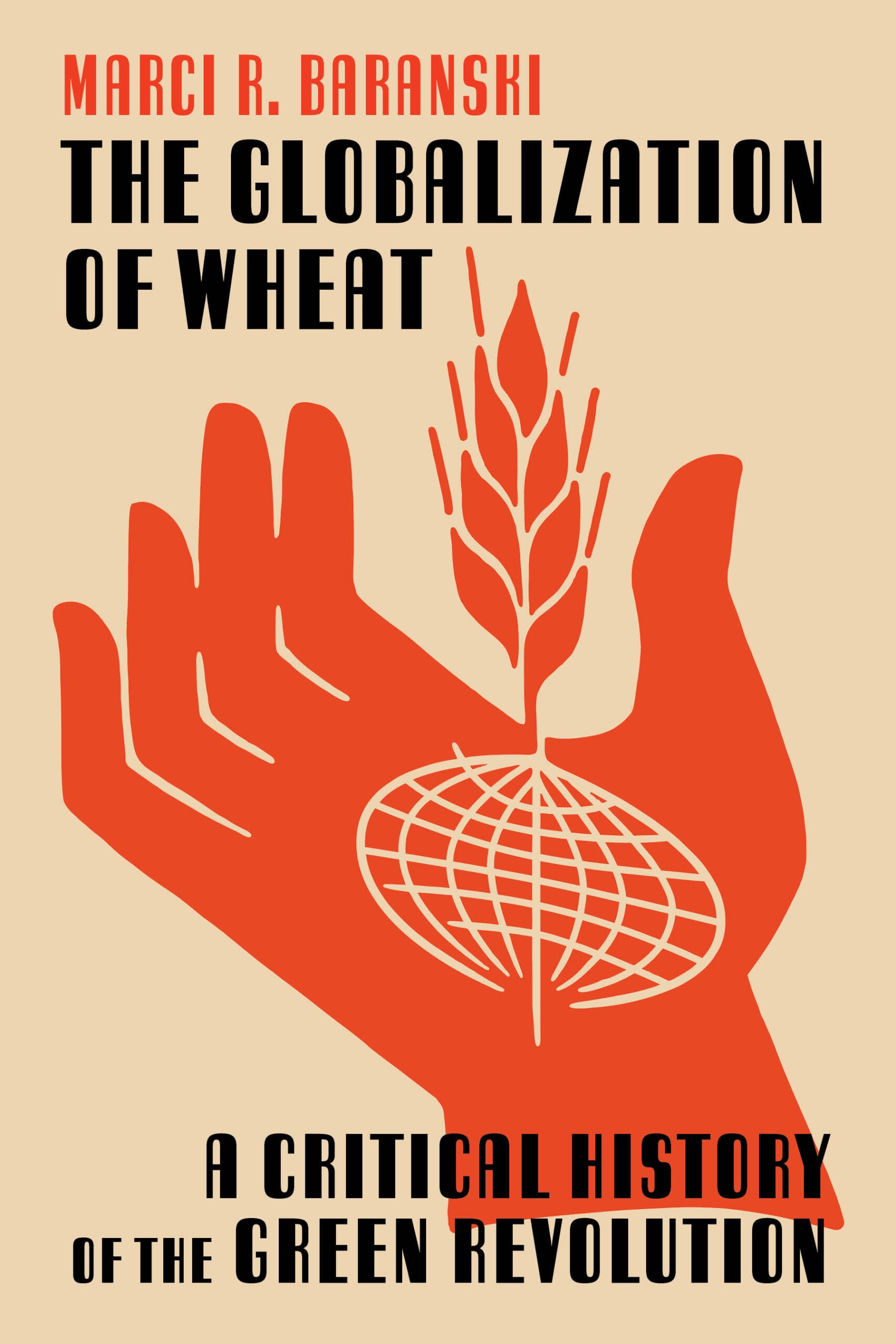
The Globalization of Wheat: A Critical History of the Green Revolution
In The Globalization of Wheat, Marci R. Baranski explores Norman Borlaug’s complicated legacy as godfather of the Green Revolution. Winner of the Nobel Peace Prize in 1970 for his role in fighting global hunger, Borlaug, an American agricultural scientist and plant breeder who worked for the Rockefeller Foundation, left a legacy that divides opinions even today. His high-yielding dwarf wheat varieties, known as miracle seeds, effectively doubled and tripled crop yields across the globe, from Kenya to India and Argentina to Mexico due to their wide adaptation. But these modern seeds also required expensive chemical fertilizers and irrigation, both of which were only available to wealthier farmers. Baranski argues that Borlaug’s new technologies ultimately privileged wealthier farmers, despite assurances to politicians that these new crops would thrive in diverse geographies and benefit all farmers. As large-scale monocultures replaced traditional farming practices, these changes were codified into the Indian wheat research system, thus limiting attention to traditional practices and marginal environments. In the shadow of this legacy, and in the face of accelerating climate change, Baranski brings new light to Borlaug’s role in a controversial concept in agricultural science.