


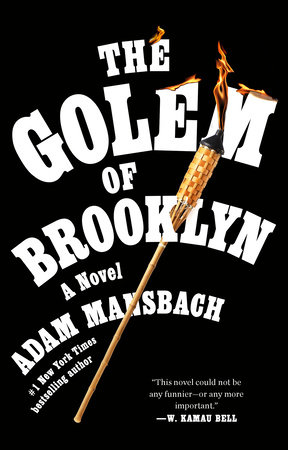
The Golem of Brooklyn: A Novel
In Ashkenazi Jewish folklore, a golem is a humanoid being created out of mud or clay and animated through secret prayers. Its sole purpose is to defend the Jewish people against the immediate threat of violence. It is always a rabbi who makes a golem, and always in a time of crisis.
But Len Bronstein is no rabbi—he’s a Brooklyn art teacher who steals a large quantity of clay from his school, gets extremely stoned, and manages to bring his creation to life despite knowing little about Judaism and even less about golems. Unable to communicate with his nine-foot-six, four hundred-pound, Yiddish-speaking guest, Len enlists a bodega clerk and ex-Hasid named Miri Apfelbaum to translate.
Eventually, The Golem learns English by binge-watching Curb Your Enthusiasm after ingesting a massive amount of LSD and reveals that he is a creature with an ancestral memory; he recalls every previous iteration of himself, making The Golem a repository of Jewish history and trauma. He demands to know what crisis has prompted his re-creation and whom must he destroy. When Miri shows him a video of white nationalists marching and chanting “Jews will not replace us,” the answer becomes clear.
The Golem of Brooklyn is an epic romp through Jewish history and the American present that wrestles with the deepest questions of our humanity—the conflicts between faith and skepticism, tribalism and interdependence, and vengeance and healing.