

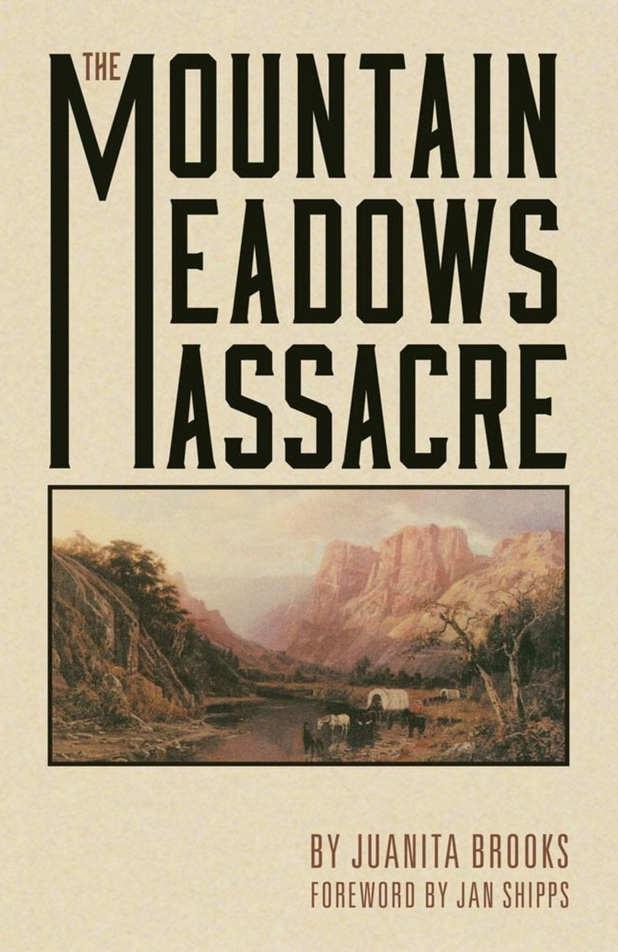
The Mountain Meadows Massacre
In the Fall of 1857, some 120 California-bound emigrants were killed in lonely Mountain Meadows in southern Utah; only eighteen young children were spared. The men on the ground after the bloody deed took an oath that they would never mention the event again, either in public or in private. The leaders of the Mormon church also counseled silence. The first report, soon after the massacre, described it as an Indian onslaught at which a few white men were present, only one of whom, John D. Lee, was actually named. With admirable scholarship, Mrs. Brooks has traced the background of conflict, analyzed the emotional climate at the time, pointed up the social and military organization in Utah, and revealed the forces which culminated in the great tragedy at Mountain Meadows. The result is a near-classic treatment which neither smears nor clears the participants as individuals. It portrays an atmosphere of war hysteria, whipped up by recitals of past persecutions and the vision of an approaching “army” coming to drive the Mormons from their homes.