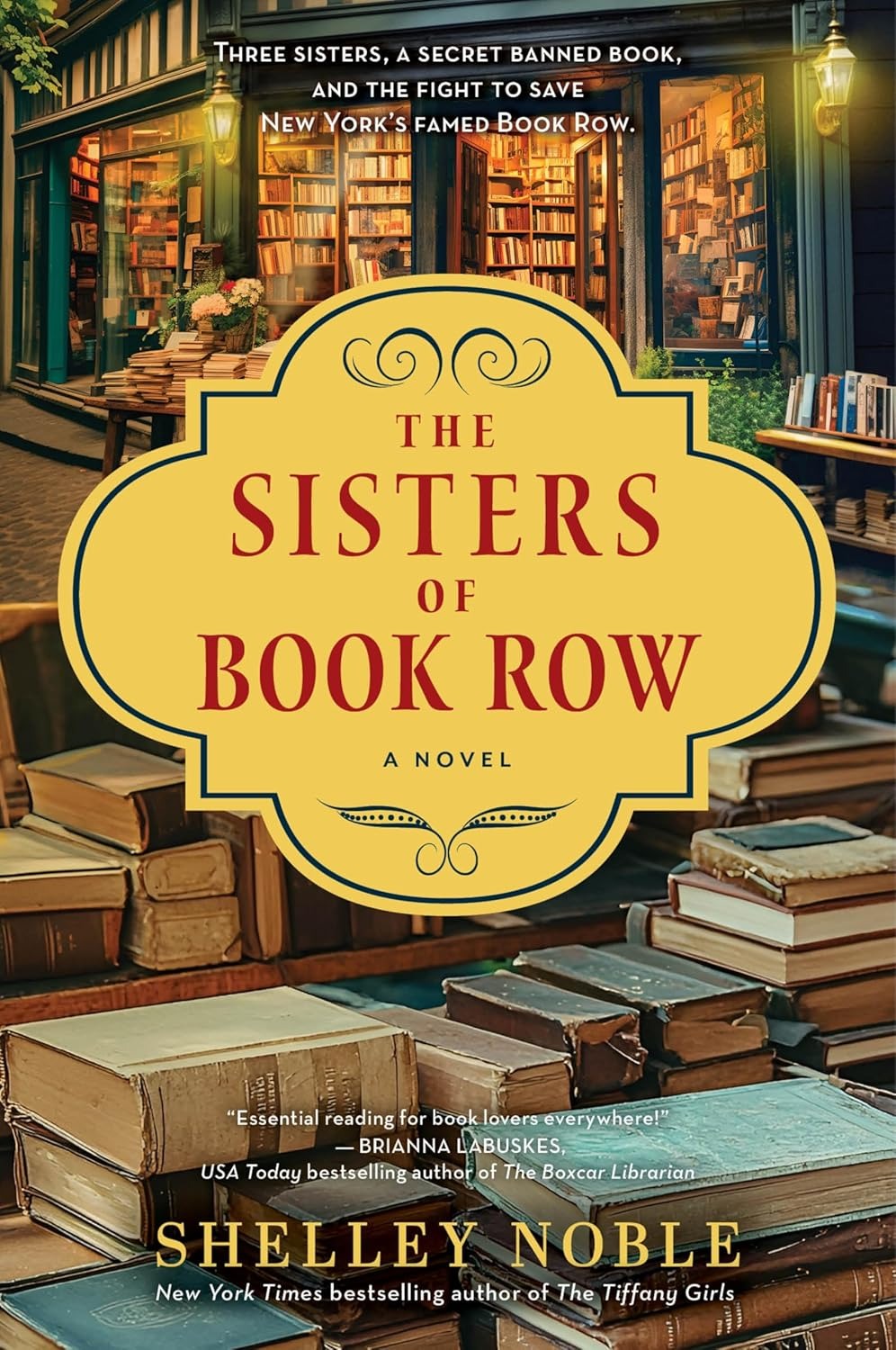
The Sisters of Book Row
1915: Manhattan’s Book Row, an eclectic jumble of forty bookshops along Fourth Avenue, is the mecca for rare book buyers from around the world, and the haunt of locals looking for a bargain. It is also the target of the most vicious censor in American history—Anthony Comstock.
And home to three sisters who vow to stop him.
For the three Applebaum sisters, the narrow, four-storied Arcadia Rare Bookshop is the only home they’ve ever known. Olivia, the oldest, is an expert in restoring rare manuscripts. Daphne, the outgoing middle sister, oversees the retail shop and is a favorite with their customers. Celia, the youngest, is left to dust and catalogue, but often sneaks out to do heaven knows what. Little do her sisters know, Celia has joined a group of young people who secretly print and distribute articles on women’s health by hiding them within the pages of ordinary cookbooks, household hints, and sewing patterns, despite the personal risk.
Meanwhile, the Comstock Laws threaten anybody who owns or circulates “obscene, lewd, or lascivious” publications. Even classic literature or fine art could send a person to jail. In the face of such oppression, Celia and the booksellers of Book Row band together. But secrets and a mysterious stranger mean the fate of the famed Book Row is anything but secure.