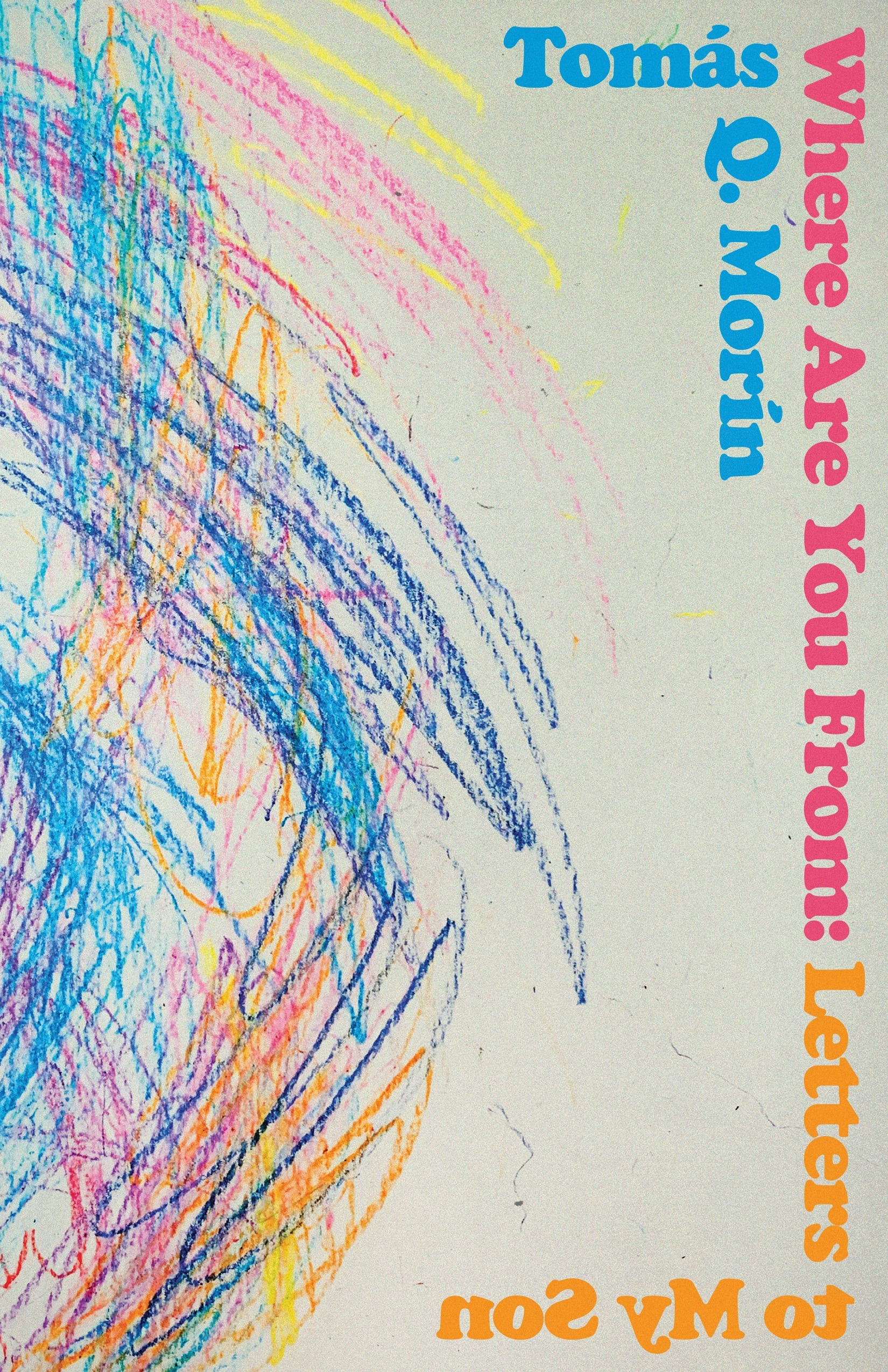
Where Are You From: Letters to My Son
In this tender collection of letters to his son, Tomás Q. Morín meditates on love, the body, and the future his son will have to face. He writes about the America his son will soon be born into, a country that will constantly question his place in it. An America that wields labels like Black, Brown, and white to make itself feel safe. An America in which Mexican American people continue to be seen as outsiders in their ancestral lands.
Starting in New Jersey during a long-distance teaching position before his son’s birth and spanning to the present day, Morín shares his experiences with racism to sketch for his son ways to respond to bigotry that won’t sacrifice his dignity or his spirit. He also challenges his young son, and the reader by extension, to reassess their perception of the world and the language we use to understand and label our surroundings. Hovering over Morín’s bold vision for shaking off the chains of injustice is a quartet of literary angels: Baldwin and Dostoevsky, Ellison and Camus. Where Are You From is a poignant and gripping testament that speaks to all the sons and daughters of America.
Publisher: University of Nebraska Press